A330F order

Avianca signed a firm order for four A330-200Fs. The new aircraft will be operated by Avianca’s cargo subsidiary Tampa. Avianca will announce an engine choice later (ignore the Trents in the picture).  The A330Fs will replace Tampa’s current cargo fleet (5 767s) and assist in expanding Avianca’s international cargo business. This order makes Avianca the first operator of the A330F in Latin America.  AviancaTaca and its subsidiaries already operate seven A330-200s and 81 A320s.

“As an existing operator of seven A330 passenger aircraft, we are confident that these new A330 Freighters will bring us greater fuel efficiency, lower operating costs and improved environmental performance,” said Fabio Villegas, CEO of AviancaTaca Holdings and President of Avianca.

More A350 Progress

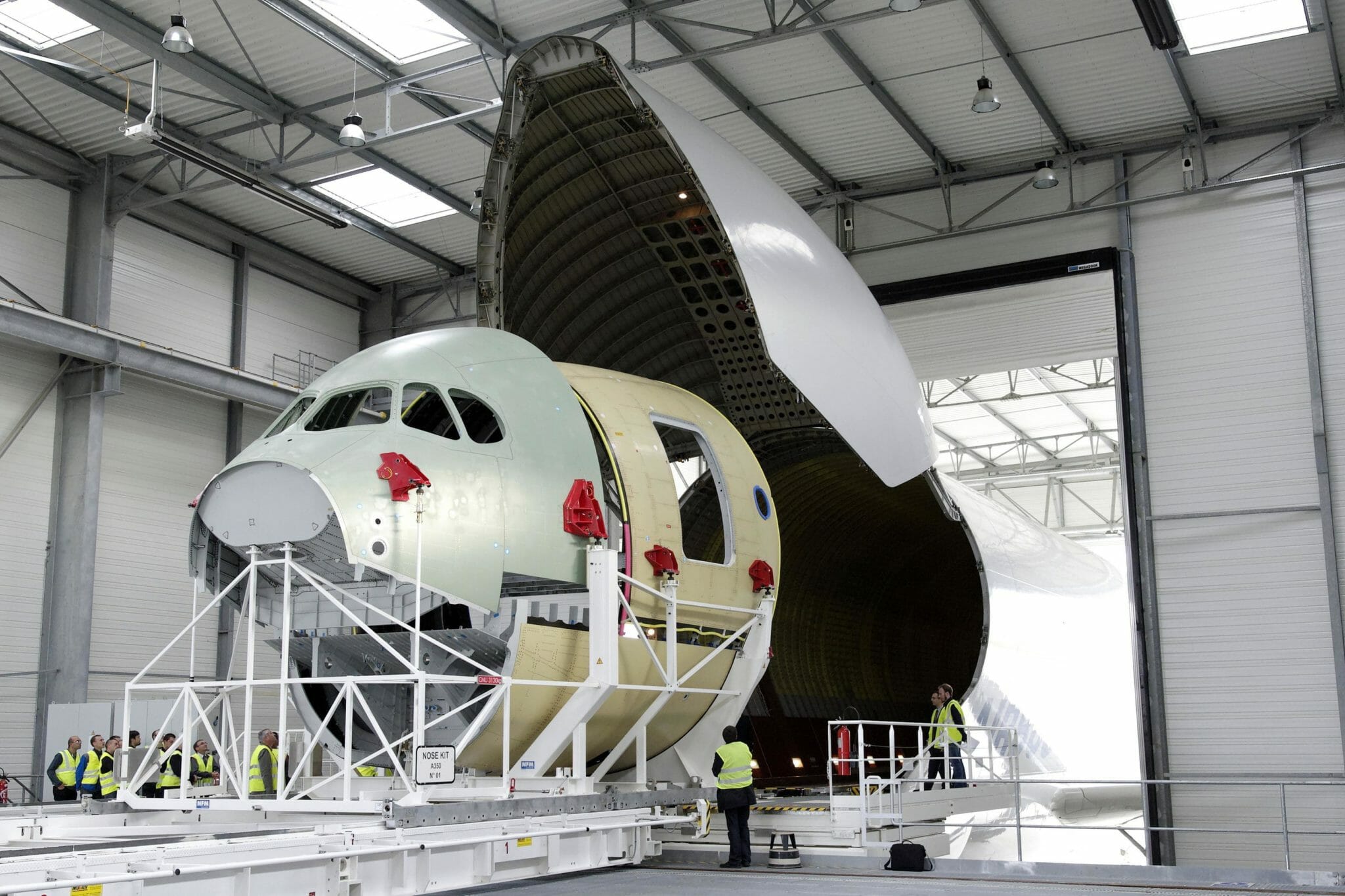
More good news on the A350 program.  The first A350 XWB nose section was transported to Airbus St Nazaire by Beluga from Aerolia’s site in Méaulte. The A350 XWB nose section comprises three main sub-assemblies: cockpit plus upper and lower forward fuselage parts, which incorporate door one and the nose landing gear bay.  Making the use of high-tech materials, the A350 XWB nose section consists of 40% composites, 55% aluminum/aluminum-lithium and f5% titanium. Once assembled and equipped, the nose section will be joined to the forward fuselage (made and equipped in Hamburg) to form together the A350 XWB front fuselage.

Progress on new programs is something everyone following the industry should cheer. Given the learning curve OEMs have to go through developing, producing and delivering the latest airplanes, seeing manifest program progress like this is encouraging.


Airbus explains why re-engine programmes won’t hurt residual values

Here is an article I did last week for Commercial Aviation Online:

Airbus explains why re-engine programmes won’t hurt residual values

By Scott Hamilton

Airbus is confident that residual values of the re-engined A320neo and Boeing 737 Max families will not adversely affect legacy aircraft, which happened to the 737 Classic to some degree with the introduction of the 737 Next Generation.

Concerns about the RVs surfaced more than a year ago when Airbus first began to seriously consider re-engining the A320 family.

Now that more than 1,200 neos and nearly 500 Maxes have been sold, the question continues to emerge.

Continue reading

IFEC priorities

As a passenger, what are your in-flight entertainment and connectivity (IFEC) priorities?  Is it in-seat power to keep you independent of airline IFEC? Is it connectivity to transport you mentally out of the tube? Or do you simply want a better seat-back screen?

We are doing a quick four question survey to understand how passengers prioritize their IFEC needs – this would be interesting for airlines.  IFEC costs are going ever higher and the ROI issue comes into ever sharper focus as airlines seek new ancillary revenue streams to offset higher fuel costs and essentially stagnant fares.

Click

787 to ANA: Signed, Sealed, Delivered, I’m Yours!

After a three year delay, Boeing has finally delivered the first 787 to ANA.  This is a significant step, and congratulations are in order to Boeing for their perseverance under a set of extraordinary difficulties, albeit some self-inflicted.  Now, however, come the real problems — ramping up the production line, establishing a second line with new personnel far from the experienced supervisors in Seattle, and maintaining quality and schedule during that process.  We hope Boeing will have better luck with the production process than it did in the development process.  While it is a day for celebration in Seattle, a lot of hard work remains until the program can be considered stable and profitable.

Congratulations to ANA on being the first to fly a new technology aircraft and taking the risk as a launch customer.  ANA has been patiently awaiting the airplane for three years, and we look forward to a successful introduction into service in the fourth quarter.  We wish Boeing and ANA the best of success with their new aircraft.

Airbus Assembly Facility in Mobile Hinges on A330 Freighter and Potential Order

Airbus planned to build its tanker for the USAF were it selected for the program in Mobile, Alabama, but hopes for a facility were dashed when Boeing was selected as the surprise winner of the competition.  But all may not be lost.   The industry rumor mill is abuzz that a major order for the A330 freighter may be on the horizon, and that it will be substantial enough to justify opening another assembly facility in the US.  It is also abuzz about Boeing massively cutting prices on its 767-300F to prevent this from happening – so it will be interesting to see who wins this intense competition.

The prospect of assembling an airplane that already has significant American content in the US will make future competitions quite interesting, as the “Made in USA” label on total content would be about the same for a Boeing or EU-made Airbus – both using global supply chains with final assembly in the US.

A great workforce, competitive labor rates, and the ability to offset currency risk with the dollar/Euro ration should bring significant benefits to both Airbus and Alabama.  Let’s keep our fingers crossed that this job creation action takes place.


Atlas Air Cancels 3 747-8F Orders – Nobody Wants to be First

Last week it was Cargolux deferring deliveries with a dispute, now Atlas Air, the second 747-8F customer scheduled for deliveries, has taken its options to cancel its first three aircraft orders, deferring deliveries of its nine remaining orders to later this year, with what it indicated it hopes to be “better performing aircraft.” Continue reading

If You Fly – You’ll Cry!

Obama’s new jobs bill and economic recovery plan will also increase taxes (via fees) on the airline passengers, as well as general aviation.  In the proposed legislation, airline passengers will be impacted by a raise in the 9/11 security fee from $2.50 per segment to $5 per one way flight, and $10 round trip.  In addition, a $1 increase will be added each year from 2013-2017, so by the end of 2017, the fees would be $7.50 and $15, respectively.  All for the privilege of either being fried with backscatter X-rays or groped by a TSA agent. Continue reading

Obama Proposes $100 per flight Tax on Business Turbine Aircraft

President Obama has proposed a $100 per flight tax on turboprop and turbojet business aircraft operating in the United States.  These fees would be in addition to the current taxes, collected through a tax on aviation fuel, and increase the cost of using business, and personal, jet aircraft.   As other countries have discovered when implementing similar fees, the impact on aircraft utilization can be significant, and travel volumes decline.  For an industry already suffering from a recession, particularly at the low end of the market, this will be devastating. Continue reading