While Engines Drive Technology – It’s Not Just Engines Anymore

The re-engining announcement for the 737 by Boeing has given us pause to consider the impacts of both airframes and engines and their impact on commercial aircraft.  Clearly, engines are the driving force for technology in the industry, as fuel burn is approaching 50% of operating costs, and the proportional impact from changes in engine technology are higher than other factors.  But what about other elements, and how can new airframe developments, taken together, impact the economics of aircraft.

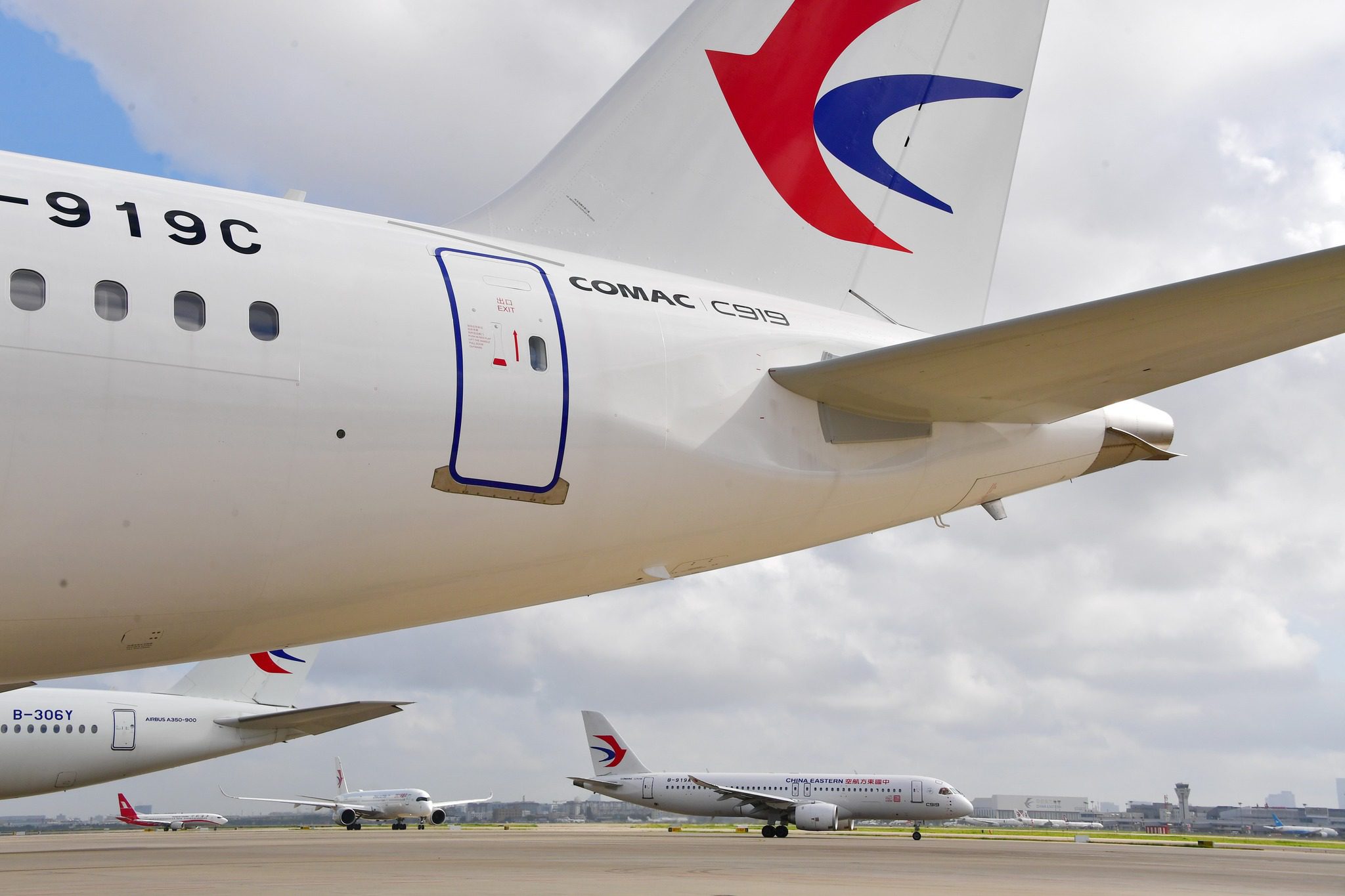
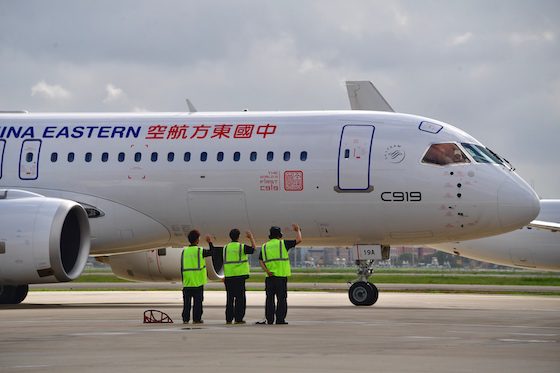
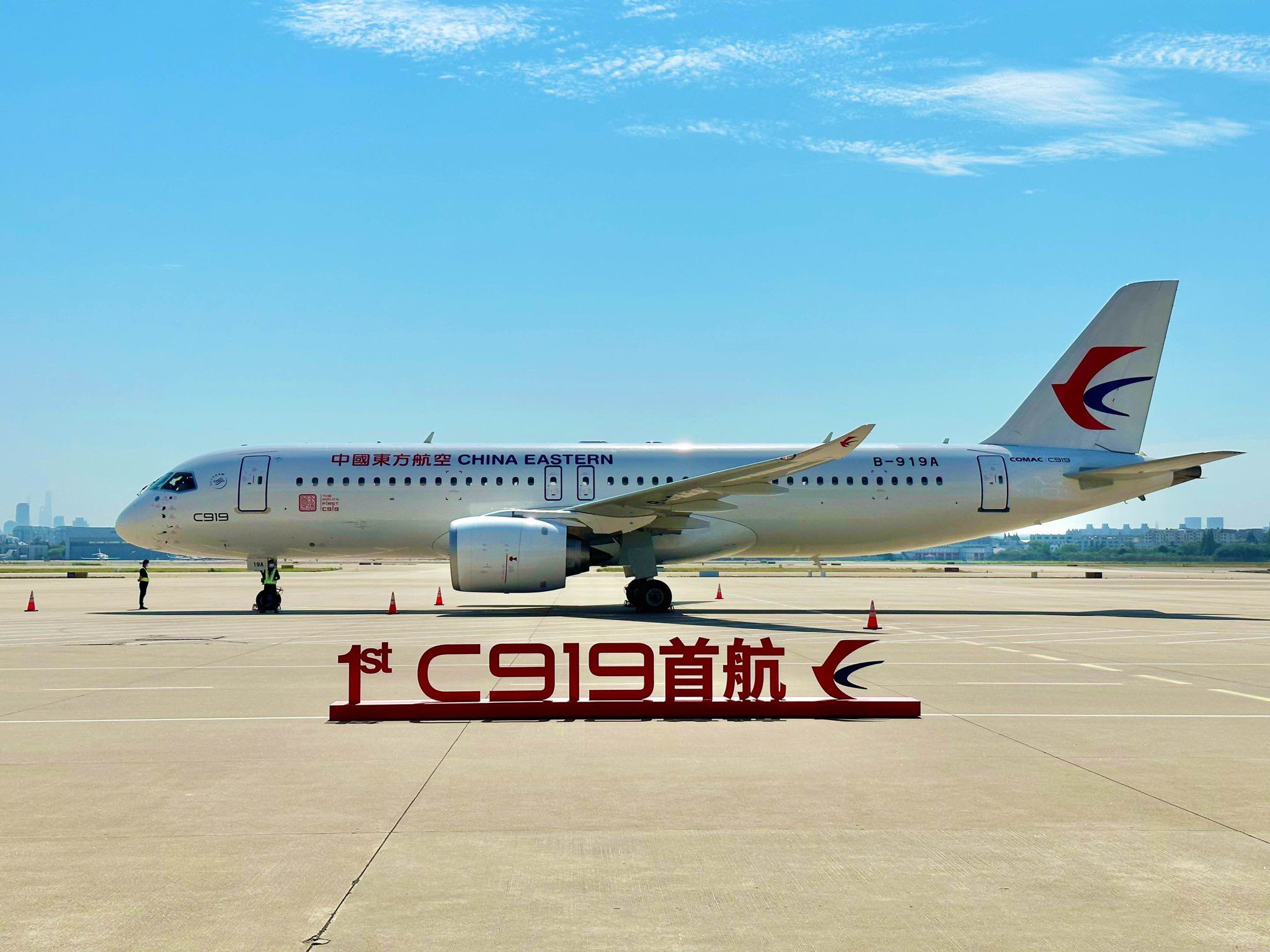
The 787 and A350, with composite structures, promise a dramatic reduction in operating costs well beyond the savings from new technology engines.  The same goes for the Bombardier CSeries, which will offer a 15% reduction in overall operating costs, about half from new technology engines and the other half from new airframe technology.  Irkut’s MS-21 and COMAC’s C919 are being designed both for domestic and export, with world class suppliers assisting with their new 21st century designs.  Whether they achieve similar results as Bombardier remains to be seen, but they are quite likely to be better economically than the more dated designs from Airbus and Boeing.

In comparing a re-engined aircraft with an all new technology airframe, the savings for a re-engined aircraft will typically be about half that achieved by a new technology airframe with new technology engines.  The trade-off is capital costs, as Boeing and Airbus can continue to produce existing products with new engines at lower cost than all new aircraft programs, such as the CSeries, MS-21 and 919.  Can the economies of scale and pricing power keep Boeing and Airbus on top?  That is the key question for the next decade, as both of today’s players are betting on yesterday’s technologies.

The narrow-body market will soon undergo a fundamental change, and Boeing and Airbus will be eclipsed as technology leaders.  Let’s examine the current and planned aircraft under development that will enter service before 2021 in the chart below.

It is interesting to note that neither Airbus nor Boeing have a 21st century airframe and engine combination, which all of the new competitors will.  Does that mean that the competitors will offer better overall operating economics?  The answer is quite likely.  That means Airbus and Boeing will need to compete on price, service and support, and reputation rather than technology.  But Bombardier has global support and a strong reputation, and has recently signed an agreement to help COMAC — so the competition may evolve to perceived risk and price.  Once these new aircraft are in service and operating reliably, and risks are removed, the nature of competition will turn to price, and Airbus and Boeing must price to the point of economic indifference.

The current strategy for Airbus and Boeing is to lock up as many orders as possible for neo and RE models, expand production capacity, and try to price the new competitors out of the market through economies of scale.  That may work.  While the Chinese and Russian markets are expected to be most successful in their domestic markets, Bombardier will be an effective and tough competitor.  And if Bombardier pulls the trigger on larger CS500 and CS900 models, for which they have reserved trade names, the competition could become even more interesting.

With Boeing now joining Airbus in putting off building a new airplane and ceding the mantle of technology leadership to Bombardier, the CSeries could be the real beneficiary – now that everyone knows it will be the only established player with a new technology narrow-body program through the middle of the next decade.

The Coming Feeding Frenzy

American Airlines did a brave thing today with its amr-aircraft from Airbus (260+365) and Boeing (200+100).  If you are a fleet planner at United, Delta or Southwest, your stomach just took a very unpleasant turn. The US domestic fleet (except at US Airways and Continental) tends to the aged side. These airlines missed out the last order wave because of poor financials plus a soft demand.  However the cost of fuel and rising MRO costs are forcing hands – they cannot wait much longer and must renew fleets. This is what Airbus and Boeing have been waiting for – the coming feeding frenzy.

Well its here now. But American was not only brave, it was strategic too – it has bottled up just about every production slot Airbus and Boeing could have.  Boeing has the P-8 line which can be harnessed (it will have to) to increase 737 production to reach a goal of 60 per month.  Airbus has a China factory but that won’t be used for this frenzy we think – it is much more likely that Airbus will now go ahead with its Alabama factory, originally planned for the tanker. This will allow Airbus to also reach about 60 planes per month.

There will clearly be a lag before we see 120 single aisle planes coming out of factories every month – 2016 or maybe even 2017.

US airline fleet planners must be choking to realize it will be closer to 2020 before they can hope to get their hands on new more fuel efficient airplanes.  American has a lock on delivery slots for 737NGs and REs – plus Airbus’ neo production is surely stretched into the mists of 2018 by now.  This strategic move by American could mean it operates the most fuel efficient, and quietest, fleet for years before the US competition catches up.

The pressure on Airbus and Boeing to hire will be prodigious. Supply of the skills required is limited and the pool they are going to shop in is the USA. This is possibly the happiest day at aerospace unions in decades. There is going to be mountains of work and labor rates are going to be higher – Airbus and Boeing demand will ensure this.  Unions will know that the other airlines will be part of the feeding frenzy within months so they are going to be busy for years. Throw in the myriad parts suppliers and you can only imagine the limited supply of skilled labor  – its time to get work in aerospace again! This is an industry that forgets slumps faster than a sardine forgets the last circle it swam. Its all sunshine and morning in America today.

As much as Boeing celebrates yet another 737 rebirth (we cannot see the Boeing board turning down the RE now) they have to be fuming – they lost exclusivity at American and worst of all, Airbus has not only won a foothold at American, this foothold is now probably a beach head in Alabama.  In fact, this American order could be seen as a loss for Boeing – they could and should have had it all, but for the dithering on NSA vs. RE.

There is even more to consider. If airlines cannot get their hands on the “neo “versions of single aisle planes, what are they to do? Ryanair is toying with COMAC and now may just take the plunge.  Others will likely follow that lead. There is also IRKUT’s promising MC-21 on the upper end to consider.  At the lower end, the American order has to be excellent news for Bombardier which now represents not only the new technology (and the original disruption creator of the feeding frenzy) – it crucially has production capacity and delivery slots. Delta and Southwest are now surely going to revisit the CS as an option.

American’s order is a tectonic plate shifter.

Ryanair and COMAC – Part III

In the event we are to believe the naysayers here at the Paris Air Show, Michael O’Leary and his airline are behaving like they are serious about the C919. The considered opinion among the considered in Paris is that Ryanair is playing a grand game to make Boeing blink.  Airbus is less likely to blink given, shall we say, history.

As Mr O’Leary states in the linked article “….we remain in continuing discussions with both Boeing and now COMAC…” There is no mention of Airbus. And he goes on to say “…today’s announcement won’t affect our long standing relationship with Boeing…” Well what is it?  A game of chicken?

COMAC has nothing to lose. Indeed, Mr O’Leary is apparently not a patient man and he is dealing with the most patient people in business.  They will outlast and tire him.  COMAC’s C919 is more likely to run late than say the MC-21.  But IRKUT is not as hungry.  COMAC obviously thinks they have manageable risk.  Even if – and its likely – Ryanair stiffs them, they are likely to learn a lot about satisfying the most demanding LCC in the world.

The linked MOU is mainly fluff.  We are comfortable that both sides know this.  Actually everyone knows this. But Ryanair has thrown down a gauntlet to Boeing.  This would be laughable under normal circumstances. No doubt there are lots of giggles among Team Boeing.  However, it would behoove Boeing not to make too much fun.  The Airbus neo is cleaning up in Paris.  Even though Boeing has secured some 737 orders, it is not at the same level as neo orders. As of tonight we have 49 737s compared with 210 A320neo’s sold at the show.   The market is speaking (shouting?).

The aviation world, especially airplane buyers, are growing frustrated waiting for Boeing to share a definitive vision on the future of its single aisle program. The 737 as we know it cannot go on forever.

IRKUT struts its MS-21 (MC-21)

In a fancy showroom at the Paris Air Show, IRKUT has its fuselage display of its new airliner, now known as the MC-21. The company is new to the medium sized commercial airliner business, but has tremendous aerospace experience via its military programs and is involved with the SSJ100.  For example, IRKUT is the company behind the SU-30 and YAK-130 and Beriev Be-200. Continue reading

Boeing Still Undecided about New Narrow-Body Replacement

Boeing is still obfuscating regarding a 737 replacement, while increasing production rates for the existing models. Two things are clear — the A320neo has a significant economic advantage over the current 737NG series and is selling quite well, and that the 737NG will face increasing competition from the A320neo, Bombardier CSeries, COMAC’s C919, Irkut’s MS-21, and a new model from Embraer that is pending launch based on what Boeing will do.

Of course, when a competitor bases its new product decision on your decision, keeping things close to the vest while working on parallel options is an excellent strategy. Unfortunately for Boeing, market conditions won’t allow that strategy to continue forever.

Boeing has stated that it will not undertake two development programs simultaneously, as it did with 787 and 747-8 — but two aircraft will need replacement – the 737 and 777, each of which is facing new competition from Airbus in the A320neo and A350XWB.

It is clear that Boeing’s market share for narrow-body aircraft is peaking — as the narrow body market for aircraft over 100 seats has grown from 2 to 6 participants over the last 5 years. But this has also been the cash cow for the company and the 737 has been the best selling model of all time since its introduction in 1967.

The first new technology narrow-body, the Bombardier CSeries, is only two years from entry into service and the CS300 has a significant advantage in operating economics over the 737-700 (and even larger -800).

Boeing will need a leapfrog – but using the same new technology engine as the CSeries and neo, there isn’t much of an advantage without a radically different design. A 737 replacement using today’s technologies would not likely provide Boeing with enough of a competitive advantage to differentiate it.  A re-engining would enable it to compete more effectively with neo, but remain behind CSeries in economics.  C919 and MS-21 could also pose a challenge, as they will also be new designs using the same new engines – LEAP and GTF, respectively.

The re-engining option is still being studied, and may be needed as an interim option if neo continues to rack-up orders at its current rate. Airlines want savings from high fuel costs now, and Bombardier and Airbus are best positioned to deliver them in the near term.  The 737NG can compete effectively until the new aircraft begin to be delivered – but that’s only 2 years away, and the lead time for a re-engining program is likely 3-4 years.

Prediction – without a re-engining, the market for the 737 will fall off just as the production increase comes into play.  But this increase in production rate might be the perfect way for Boeing to quickly work off all of the existing backlog to clear the slate for a new aircraft,  once they decide to move forward.  One possibility for Boeing would be to utilize primarily composite structures for a high frequency narrow body aircraft — but whether composites can handle the high cycle operations of a narrow-body remains a question.  Bombardier chose a lighter Aluminum-Lithium alloy for the CSeries, and Airbus is also leery of composites for high cycle narrow-body operations.  Could 787 technology migrate well downward to the 737?  We’re not convinced that it can without presenting maintenance issues.

The Decision Won’t Come Until the 787 Program is Stabilized

The key for Boeing is getting the 787 and 747-8 delivered this year. The Board of Directors is not going to approve a new program until the existing ones are under control, and first deliveries will go a long way for management to prove its case that the difficulties are primarily behind them. Of course, the 787 program still faces massive challenges, with a new plant, labor issues, a slow ramp-up, heavy rework on the first 20+ aircraft, and a large backlog to work off at low margins due to delay penalties.

The day of decision will come shortly — and will decide which program to undertake, the 737 replacement or a 777 replacement. Simple re-engining and upgrades would render these aircraft competitive, but will not create the industry leadership position in economics they once enjoyed that created their success.  That’s a significant change in competitive dynamics.

Which market do you attack. The large one that is becoming increasingly competitive, with six players rather than two, or the smaller one that remains a duopoly with Airbus.  We’ll find out soon which market Boeing considers most critical to shore-up in the short term, and which can wait another five years. A logical sequence would be a re-engining of the 737, a 777 replacement, and a new narrow body entering service in the 2024-2025 time frame.

The Real Cost of the 787 Debacle

The real, but hidden cost of the 787 delays is the impact on Boeing’s long-term competitive position. With the inability to accommodate two new aircraft programs simultaneously, the company must choose which of two much needed improvements will come first. Had the 787 been accomplished on time, one of those programs would already be three years down the road and nearing market entry, with another ready to launch in 2013.   Now, one of them won’t get started until 2012 for delivery in 2018-19, and the other likely in 2018-2019 for delivery in 2024-25.  The three and one-half year delay has compounded into a five to six year setback in new product development, and has provided a window of opportunities for the new competitors in narrow-body aircraft.   Boeing has inadvertently given its competitors an opportunity to change the competitive dynamics of the industry, and they are taking advantage of that opportunity.

Ryanair and Comac – Part II

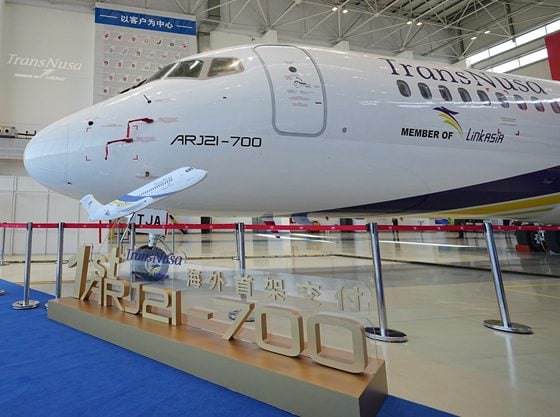
Just after Addison mused about the C919 model in a Ryanair office in a post yesterday, new reports today indicate that Ryanair will announce cooperation with COMAC in developing the aircraft at the Paris Air Show. Maybe there is something there, after all! Could Ryanair be the launch western customer for a Chinese aircraft?  This could be an interesting play, as Ryanair is a large Boeing customer that was recently rebuffed in an attempt to place a large order for new aircraft at a substantial discount — too substantial for Boeing to agree to.  With the Chinese entering the market with what will almost certainly be a lower cost alternative, using the new CFM LEAP engines that power A320neo, western avionics, and major subsystems from western companies, the C919 could become a viable alternative if it gains credibility with airlines outside of China. Continue reading

Here’s a thought…

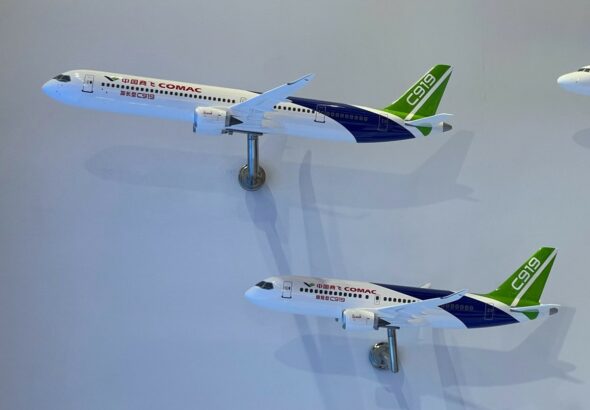
As the world gets ready for the Paris air show, take a look at this photograph apparently taken of a model plane on the Ryanair Chief Pilot’s desk.  In case you don’t recognize this, its a C919. 

Of course everyone in this industry collects models, and we all know that COMAC is pushing the idea of a C919 as hard as it can.  And Ryanair is looking for something new and of course, cheaper than the 737. Moreover, we do not imagine the Chief Pilot will be thrilled to hear of this snap taken of his desk. (The model has probably been hidden now).  In a less cropped version of this image, we see no other models on the desk.

So this could be nothing or it might be something amusing.

Outlook for Paris Air Show

As we head into the Paris Air Show, here is AirInsight’s outlook:

The big news at air shows are orders for new aircraft.

Forget the drivel that Airbus “saves” up orders for the show and Boeing doesn’t. Customers drive when the announcements are made, and many like the limelight of air shows, and some don’t. Boeing has announced many orders at air shows that were “Unidentified” on the order books. Airbus typically has fewer Unidentified orders on its spreadsheet and we know that Airbus works mightily to conclude orders at the air show—as well as converting MOUs to firm orders during the show and re-announcing them—but this is all part of the game.

So here is a company-by-company run-down of what we expect:

Continue reading

PARIS PREVIEW

Our Paris Airshow Preview, with guest Richard Aboulafia of Teal Group joining Addison Schonland and Ernie Arvai, will begin at 12 noon Eastern time TODAY.   Please join us and register here:

Click Here


The Dynamic Regional Jet Market

AirInsight has published another of its industry studies by the above title.  The regional market is called dynamic because there is so much activity in the ~100 seat segment. This market segment has typically been a graveyard. Continue reading