

Delta Air Lines chose Amazon’s Leo satellite network over Starlink for its next-generation in-flight Wi-Fi. That’s the actual news. Everything else happening around it this week — a CEO allegedly trash-talking Elon Musk, Musk threatening to end that CEO’s career, and two rival airlines turning the whole thing into a loyalty-program ambush is noise sitting on top of a real, and currently under-explained, technology decision.
The Status Match Offensives
- United’s “Switch to Better Wi-Fi”: A direct campaign offering Delta and American elites a 90-day match, fast-tracking top-tier fliers to Premier 1K if they meet compressed spending targets ($1,500 to $7,000) within the window.
- American’s AAdvantage Match: A concurrent promotion that lets status holders from Delta, United, JetBlue, and Southwest maintain equivalent status for four months or longer by hitting specific spending benchmarks.
- Social Media Poaching: Both carriers have actively monitored social platforms, replying directly to frustrated Delta fliers online to coax them into jumping ship.
The Decision Nobody’s Explained
Delta currently uses Viasat, and the complaints are familiar to anyone who’s tried to work on a long Delta flight: slow, inconsistent, and prone to dropping on exactly the routes where connectivity matters most. The fix Delta has chosen is Amazon’s Leo constellation — not Starlink, the low-earth-orbit network everyone defaults to given SpaceX’s head start and name recognition in the category.
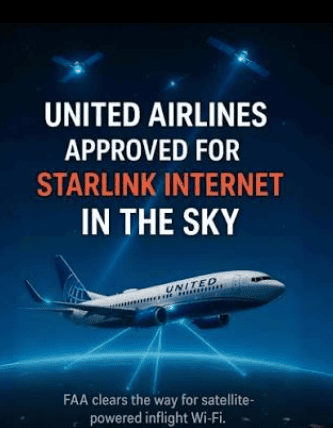
The rollout is not fast. Delta’s Leo deployment begins in 2028, initially covering 500 aircraft. United, by contrast, already has Starlink live on more than 600 aircraft and is targeting full-fleet coverage by the end of 2027 — a full year ahead of when Delta’s first 500 jets even start getting equipped.
What’s missing from the public record is what would let anyone evaluate the decision: Delta hasn’t said why it chose Amazon Leo over Starlink. Not the technical comparison, not the commercial terms, not the capacity or latency trade-offs typically cited in satellite-connectivity decisions. The public discussion so far is personality conflict, not product comparison — which is itself worth noting, because the one time an airline publicly explains an infrastructure decision like this is usually right when it looks good.
The Musk Feud, With a Caveat
The timing lines up with a very public spat between Delta CEO Ed Bastian and Elon Musk. Reported comments attributed to Bastian at a company event — “We do not want to be with Elon Musk. Trust me,” and, referencing earlier Starlink testing, “It’s all true what they say about him” — circulated widely starting September 29. Musk responded the next day with “he will lose his job over this,” plus a jab about Delta’s Wi-Fi being so bad it would double as an AI containment system.
Here’s the caveat that matters: the original source reporting Bastian’s quotes explicitly said they could not confirm the quotes were accurate. As far as we’ve found, Delta has not confirmed or denied them on the record. That makes this a reported-not-verified exchange, not a confirmed public feud — not worth treating as established fact. We’d want direct comment from Delta before describing Bastian’s remarks as anything more than reported.
What is verifiable is Musk’s own public response, posted under his own name, and the fact that Delta made a vendor choice that puts it meaningfully behind United on in-flight connectivity for at least the next two years.
Competitors Are Already Monetizing the Gap
Whatever actually motivated Delta’s decision, United and American didn’t wait to find out — both rolled out elite-status-match campaigns this week aimed directly at Delta’s top-tier fliers, with United explicitly using its Starlink fleet as the pitch and fast-tracking matched status up to Premier 1K. That’s a notably fast, coordinated response to a satellite-vendor announcement, and it says something about how seriously rival airlines now treat in-flight Wi-Fi quality as a loyalty lever, not just an amenity. Moreover, several social media comments from United frequent fliers endorse this, inviting their friends to switch.
It’s also a reminder of how exposed Delta now is on a metric it didn’t used to have to defend. Delta has spent years building a premium-brand, reliability-first identity. A multi-year connectivity gap against United — on a feature that’s increasingly table stakes for the business travelers Delta’s loyalty program is built around — is a real competitive vulnerability, regardless of whatever personal animus is or isn’t driving the public conversation around it. This is a crucial point that must not be dismissed. Delta has to play defense, a role it isn’t used to.
Bottom Line
The interesting story here isn’t Ed Bastian versus Elon Musk — those quotes are unverified, and even if accurate, personality conflicts don’t explain satellite-architecture decisions. The interesting story is that Delta picked a Wi-Fi vendor whose rollout doesn’t start for two years, on a fleet-coverage timeline that trails United’s by a full year, and has offered no public explanation.
Meanwhile, United and American are already using that gap to poach Delta’s best customers. Until Delta says more about the actual decision, the fairest read is that the only confirmed fact is the timeline — and the timeline favors United.
Views: 0