

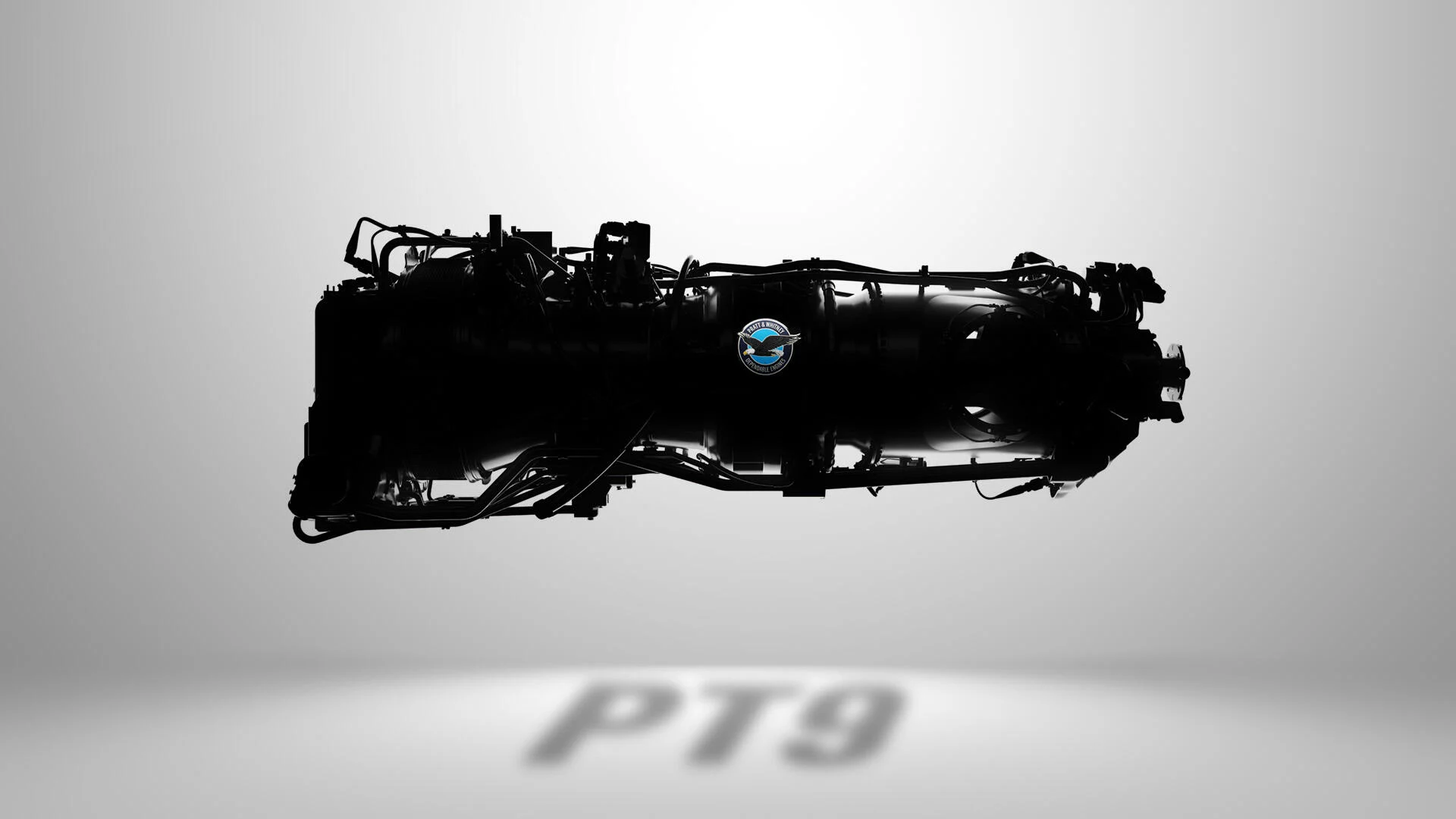
Pratt & Whitney Canada (PIC) revealed the certified PT9 turboprop engine, with high expectations and thrust levels that fit between the PT6 and PW127 turboprop families. The PT6 is the best selling turboprop in history. The PT9 is not a replacement, but a complimentary turboprop engine family.
High Expectations
The PT6 has a strong history of market leadership and continuous improvement. The engine has been in service since the mid-1960. Expectations for new turboprops from Pratt & Whitney Canada are quite high. PWC has not released details of the new engine, but have provided hints. The new engine will produce 33% more power at altitude , with 20% lower fuel burn than existing engines.
Since the PT6 is ubiquitous in the market, internal comparisons are inevitable. PWC believes the PT6 still has a lot of runway and production life. Your grandfather’s PT6 from the 1960s is quite different, except in configuration, than today’s models. Over the years, changes have included advanced materials, new control systems, improved compressors, hot sections, and propellers. PWC has effectively re-invented the PT6 multiple times.
The PT9 has large shoes to fill to compete with a program that has led the market for more than 60 years, but will be expected to do so. This is a key challenge for Pratt & Whitney Canada – maintaining market leadership. A new engine from PWC will bring expectations for high reliability and exceptional performance on day one.
Leapfrogging the Competition
New competition is coming from the General Electric (GE) Catalyst turboprop that features additive manufacturing. PWC needs to “one-up” the competitor to retain its massive lead in the turboprop market. The slightly larger PT9 is one answer for both single-engine and multi-engine turboprop designs. PWC have incorporated technologies from the recently updated PW127XT and PW800 into the PT9. The experience of these programs provide improved materials and efficiency to the PT9 design. Since the feeder programs are mature, there is high confidence that the engine will meet its design objectives.
When first launched, the GE Catalyst touted a number of planned advantages over the PT6. The engine featured innovations to reduce pilot workload, including a FADEC-integrated auto-throttle and propeller controls. During the competitor’s development period, PWC stepped up and matched most of those capabilities for the PT6. PWC actually beat GE to the market with many of those innovations. PWC is very adept at keeping its engines at the forefront of technology, with decades of innovation building on the PT6 design and operational experience. The early PT9 that will be the baseline for a new engine family that will need to carry on the tradition of continuous improvement.
New Applications Imminent?
Pratt & Whitney would likely not publicly announce the new model without at least a potential launch customer, and possible additional programs in the pipeline. Therefore we would expect additional announcements and potentially new turboprop programs in late 2026 or early 2027 that will utilize the new engine. That is likely the point at which more details on the new engine family will be revealed.
Advancing Materials, Design, and Digital Technologies
The new engine will be in the 2,000 shaft horsepower range, and incorporate a variety of technologies from multiple program. The engine configuration has a reverse flow combustor like the PT6, and incorporates a barrel section that is 19 inches wide to enable low-drag installations. The high pressure rotor section is reported to be similar to the PW307 turbofan, and the engine will feature digital monitoring technologies more advanced than the PT6E.
The PT9 will monitor more than 300 engine parameters and incorporate PT6 E-series engine technologies that reduce pilot workload, including single-lever integrated propeller and engine controls. The engine also incorporates advanced alloys, additive manufactured parts, and fewer lift-limited parts. All of these technologies would be expected in a new engine program today, and will likely result in a step change in performance and fuel efficiency.
The Bottom Line
Pratt & Whitney has led the turboprop industry for six decades, and needs to maintain its market momentum. The PT9 will provide a new engine class that will fill a market gap between the PT6 and PW127XT and enable more efficient business and regional aircraft. Incorporating new technologies while maintaining the reliability of the venerable PT6 is a key challenge. PWC, taking proven technology from multiple programs, will likely succeed in that regard. Stay tuned for the next announcement, likely the first application for the PT9.
The PT9 is arriving just as aviation is in the midst of an electrification revolution. PWC and others are working on hybrid engine technology for future electrified aircraft programs. Given electrification, we don’t expect a 60 year production run for the PT9. Currently, electrification technology is easier for small engines, and the PT9 is less likely to be replaced in the near term than the PT6. Nonetheless, we expect technology changes and electrification to impact the market over the longer term.
Views: 0