

On Sunday night, President Trump posted on Truth Social: “NO MORE SELLING BOMBARDIER IN THE UNITED STATES!” — accusing the Canadian OEM of treating the US market as a “piggy bank” and demanding it “build here” if it wants continued access. The post landed hours before Canada’s retaliatory tariffs—15-50% on C$20 billion of US goods—took effect Tuesday, itself a response to tariffs Trump imposed on Canadian goods in August, amid a much broader trade dispute with Prime Minister Mark Carney that already spans hundreds of products.
A few aviation-specific facts complicate the stated rationale, and it’s worth laying them out plainly. As we have seen before with the tiresome Airbus/Boeing kerfuffles, politics and aerospace quickly descend into noise.
Bombardier Already Builds Here
The post’s central demand — build in the US or lose access to it — runs into a fact alongside the story itself: Bombardier already operates a defense business in Wichita, Kansas, modifying aircraft for military and special-mission use. For example, the Pegasus signals-intelligence program is pictured for the German government.
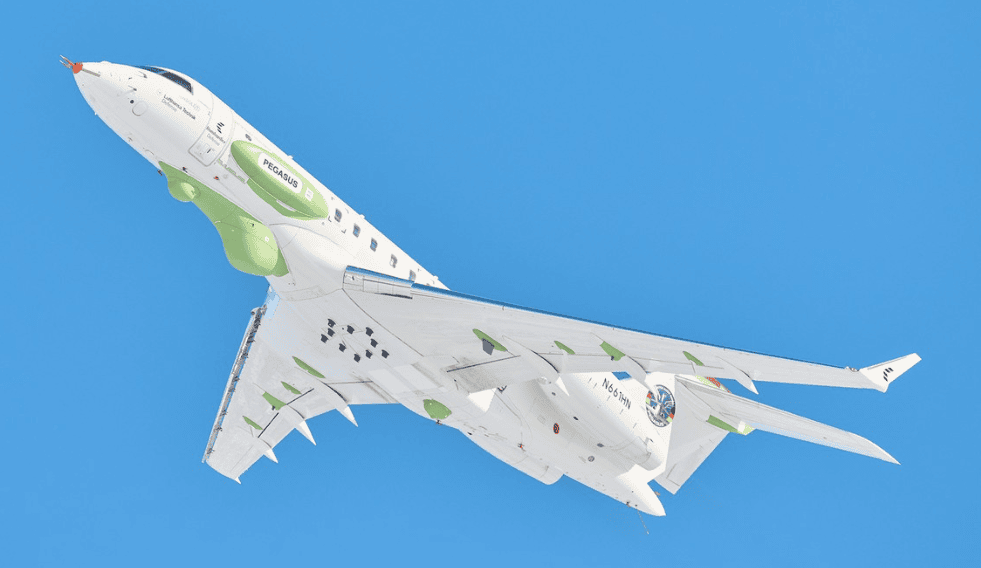
Senator Jerry Moran, a Kansas Republican, put the workforce at “more than a thousand” employees; other reporting cites more than 3,000 across nine US facilities total. Moran publicly defended Bombardier’s Wichita presence directly against his own party’s president — a notable break, not routine partisan noise. Whatever the merits of the broader trade dispute, “they must build here” doesn’t accurately describe a company with an existing, substantial US manufacturing and modification footprint.
The Gulfstream Justification Predates Itself
Trump’s post frames the threat partly as retaliation for Canada “blocking” Gulfstream Aerospace from doing business there. That referred to Canada delaying certification of four newer Gulfstream models — the G500, G600, G700, and G800. Those aircraft were certified in February 2026, seven months before this post. The specific grievance cited as justification was resolved before the threat.
This Isn’t the First Time
Trump made an almost identical threat in January 2026 — decertifying Canadian-made aircraft and imposing a 50% tariff on Bombardier jets, tied to the same Gulfstream certification dispute. That threat lapsed once Canada certified the Gulfstream models the following month. The current post repeats the structure of a threat that didn’t follow through six months ago, against a grievance that’s since been resolved twice.
How This Would Actually Work Is Unclear
No reporting so far explains a legal mechanism for blocking sales of Bombardier aircraft that already hold FAA type certification — a formal, aircraft-by-aircraft regulatory process that isn’t easily undone by executive statement. About half of Bombardier’s 5,100-plus aircraft in service worldwide already operate in the US. Revoking market access for an OEM with that scale of existing US fleet, US employment, and US-certified products would be a materially larger undertaking than the social post’s language suggests, and nothing in the public record indicates the administration has specified how it intends to do it.
What the Market Is Actually Saying
Bombardier’s 2Q26 revenue rose 6% year over year to $2.15 billion. Shares closed up 3.39% the Friday before this post, at $228 — with no visible sign the market is pricing in an access threat based on the most recent trading data available. That’s consistent with a pattern investors may recognize from January: a dramatic threat, tied to a dispute that gets resolved on its own timeline, without the threatened action materializing.
Bottom Line
Set aside the merits of the broader US-Canada trade dispute, which is a live and contested political fight. On the narrower, aviation-specific claims in this threat—that Bombardier doesn’t build in the US, and that Canada is currently blocking Gulfstream—the facts on record don’t support either as currently true. Whether that matters to how this plays out is a separate question from whether it’s accurate, and the January precedent suggests the more likely outcome is another unresolved standoff rather than an actual change to what Bombardier can sell in the United States.
Views: 105