

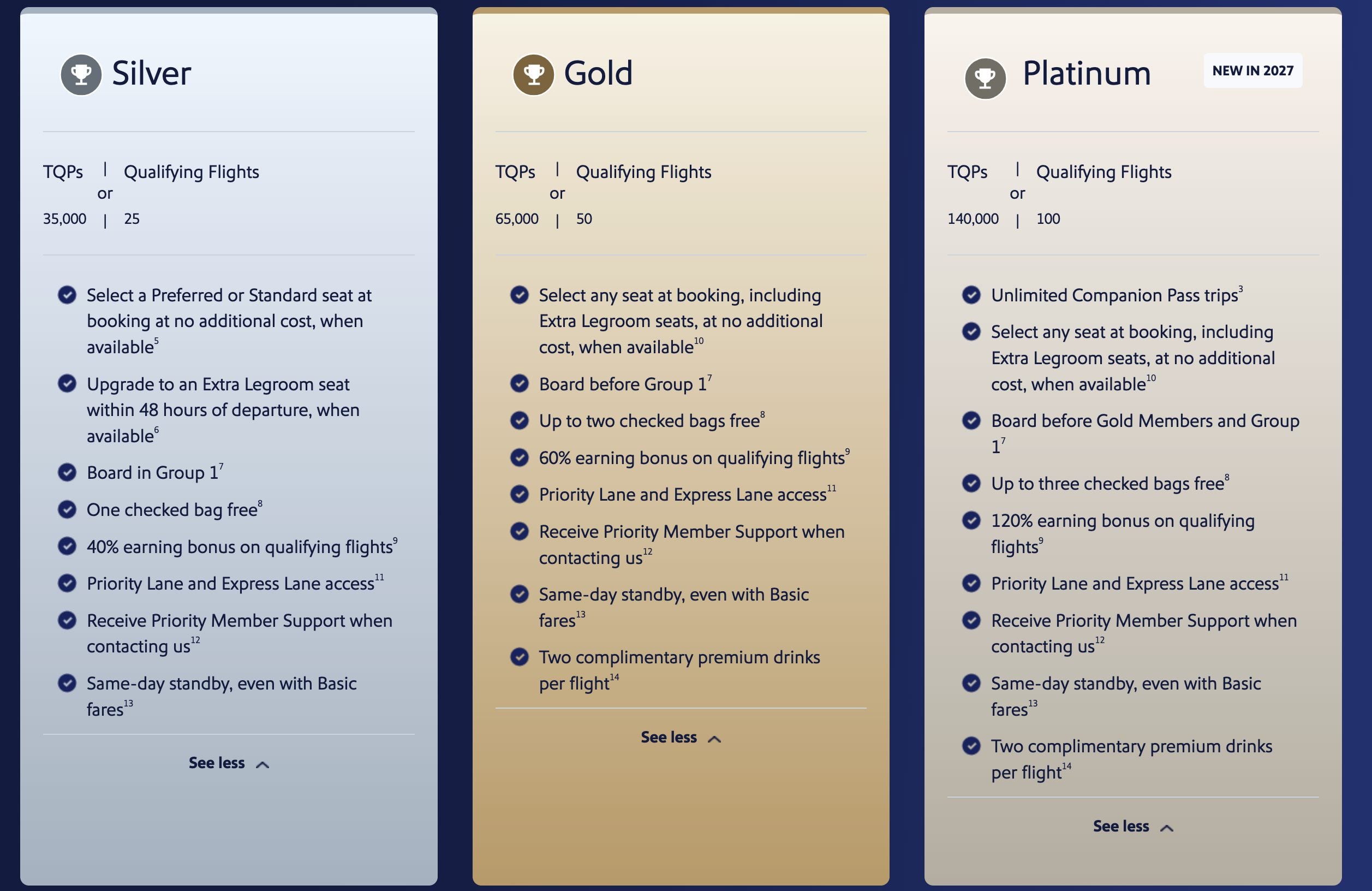
Southwest Airlines’ transition from its historic low-cost carrier operations to a full-service carrier continues. Southwest is modifying its Rapid Rewards frequent flier program. The program will now offer three tiers rather than two, similar to competing legacy carriers. Rapid Rewards will now have base, Silver, Gold, and Platinum tiers, replacing the A-List and A-List Preferred.
Southwest Loyalty Program Changes
The new Rapid Rewards changes retain some uniquely Southwest perks, including companion flights in the highest tier, which allow a designated companion to fly free. The new program also includes milestone rewards earned midway between tiers, providing extra benefits. Details of the changes are available here.
A Business Model in Transition
Southwest has previously announced and successfully implemented several changes to its former LCC business model. The carrier now charges for checked bags, replacing its former Bags Fly Free concept from several years ago.
The carrier now has assigned seating that went into effect earlier this year, abandoning the numbered access approach it utilized since its inception. The assigned seating also charges extra for legroom and preferred seats, creating another revenue-generating opportunity.
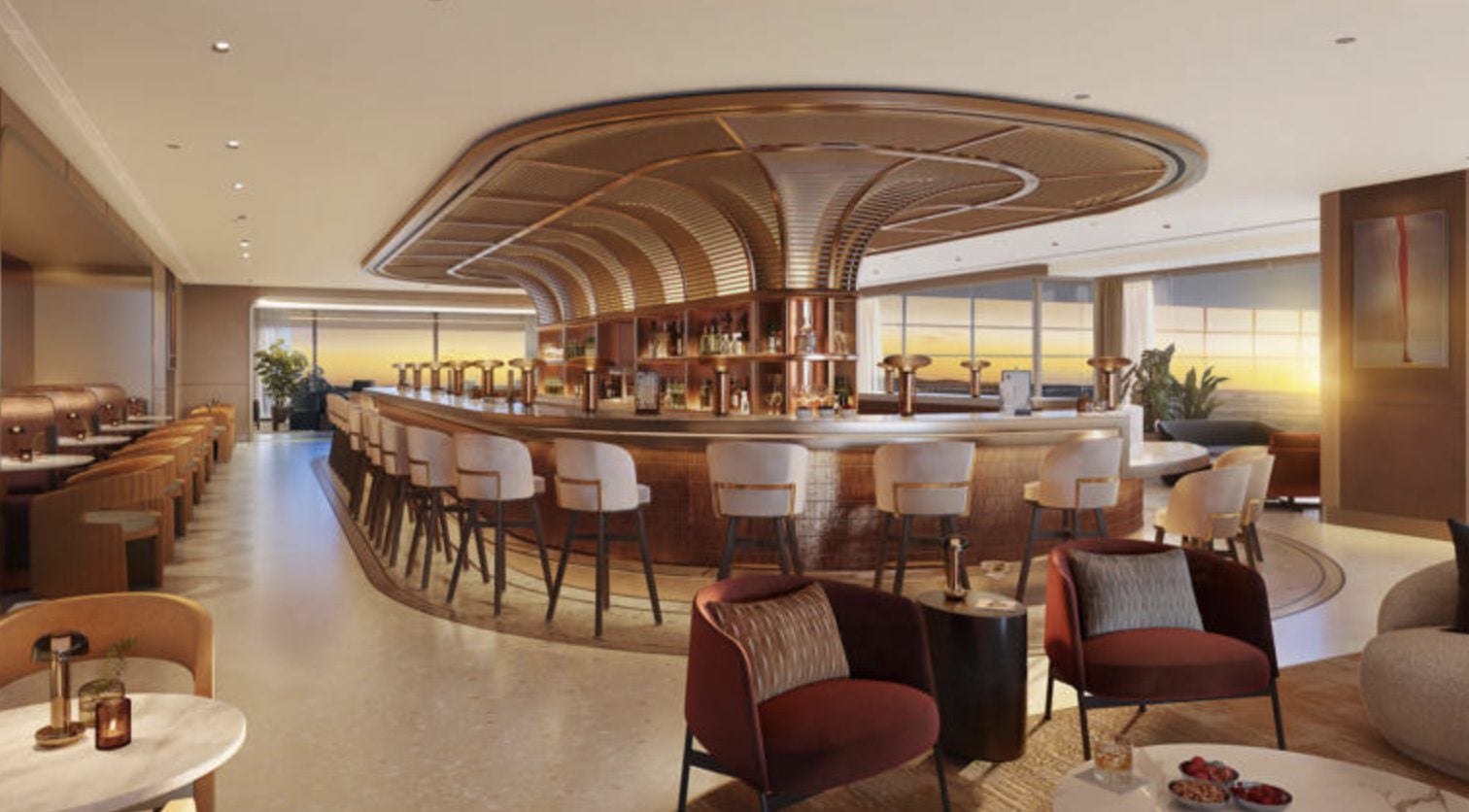
The airline is also introducing a lounge program with its credit card partner Chase. Initial lounges scheduled to open in 2027 include Austin, Baltimore, Honolulu, and Nashville airports, with access to holders of select loyalty program credit cards. Southwest plans seven additional lounges for 2028 and beyond.
What’s Missing in Southwest Airlines Transition
The missing element at Southwest is introducing a first-class service, something JetBlue and other LCCs like Frontier are doing. Premium cabin revenues, particularly internationally, are proving quite successful at Delta and United, which, like most legacy carriers, have long offered premium cabins.
With lounges, seat assignments, and now a tiered loyalty program, can a first-class service be far behind? We’ve seen Frontier introduce a larger seat option, and JetBlue will introduce domestic first class on Boston-Ft. Lauderdale flights later this year. It seems that everyone, except Southwest, wants a piece of premium-class revenues these days.
Southwest appears content not to have a premium cabin. However, the carrier operated for many years without the amenities described above. The question is whether customers will demand a premium seating option as Southwest adds premium features such as lounges. While Southwest could certainly continue and survive without premium seating, market dynamics and an increasingly K-shaped economy are creating new revenue opportunities with Southwest’s competitors.
The Bottom Line
As the carrier continues to transition its product from its low-cost heritage into a more typical full-service carrier model, the key remaining question is whether it will introduce a first class. If it does, like JetBlue, fully transition from an LCC to a legacy model, the business model for LCCs will have proven to be competitively less effective. Revenue is critical to airline success, and the new a-la-carte approaches to premium travel are currently winning in the marketplace. Projected economics will drive that decision, whether Southwest still needs new approaches.
Views: 0