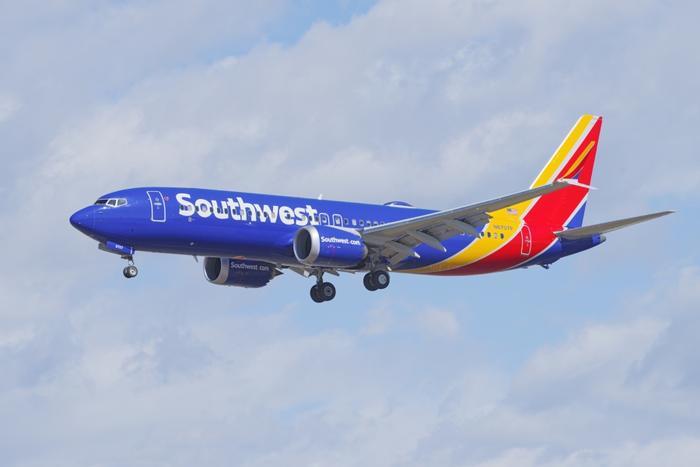
Southwest Boeing 737 MAX 8
For Southwest Airlines fliers, today is big. The airline starts assigned seating today. After 53 years of open seating, the airline officially ends its iconic “cattle call” boarding policy today at 12:01 AM, marking the biggest transformation in Southwest’s history.
Three Seat Tiers
As a sign of how the airline is becoming just like the others, Southwest now offers three cabin sections with distinct pricing:
Extra Legroom Seats
- First five rows and exit rows
- Up to five additional inches of legroom (varies by aircraft type, and 737-700s offer the full five)
- Earlier bin space access (generally quite valuable)
- Enhanced snacks and complimentary premium beverages
- Highest price tier
Preferred Seats
- Standard legroom near the front of the cabin
- Faster deplaning
- Mid-tier pricing
Standard Seats
- Standard legroom in the back of the cabin
- Lowest price tier
- Basic fare passengers get seats assigned at check-in (cannot select in advance)
Of course, there’s a “New Boarding Process”
Now we have eight Groups Replacing three (A/B/C). Southwest is transitioning from the infamous A1-A60, B1-B60, C1-C60 system to eight boarding groups displayed on digital screens, with the numbered silver stanchions being removed over 60 days starting tonight.
Groups 1-2:
- A-List Preferred members
- Choice Extra fare purchasers
- Extra Legroom seat holders
- A-List members who upgraded to Extra Legroom within 48 hours
Groups 3-5:
- A-List members (non-upgraded)
- Choice Preferred fare
- Rapid Rewards credit cardholders
Groups 6-8:
- Choice fare passengers
- Basic fare passengers (those who didn’t get earlier groups)
The Controversial Plus-Size Policy Change
Starting today, plus-size passengers requiring two seats must:
- Purchase both seats upfront (previously could get the second seat free if space was available)
- Pay applicable seat fees for both seats
- Request a refund after travel (not guaranteed)
The refund eligibility requires:
- Both seats are in the same fare class
- Request within 90 days
- The plane would have departed with at least one empty seat, or included space-available passengers
No surprise, the National Association to Advance Fat Acceptance called Southwest “a beacon of hope for many fat people who otherwise wouldn’t have been flying,” expressing disappointment over the change.
Fleet Modifications
Approximately 200 aircraft (one-quarter of Southwest’s 800-plane fleet) have already reconfigured with the new seat layout. Southwest completed cabin modifications on its 737-700 fleet, removing one row of seats from each aircraft to accommodate the new seating tiers and maintain the same boarding efficiency.
The Gate Experience – Starting Tonight
Gate areas began conversion the evening of January 26, with numbered stanchions being removed or covered overnight so they’re not visible by morning when assigned seating begins. New alternating boarding lanes with digital screens replace the old system.
Why the Change?
Southwest claims 80% of existing customers and 86% of potential customers prefer knowing their seats in advance. Which, of course, is the industry standard, so customer thinking is well-established and ingrained. But the real driver is revenue: Southwest expects $1.8 billion in additional EBIT from these 2025-2026 initiatives, with assigned seating unlocking premium revenue opportunities. Elliott Management is surely happy with this.
CEO Bob Jordan reported bag fees (implemented May 28, 2025) are “exceeding expectations,” and the airline has already realized one-third of its $1.8 billion initiative target. Barclays analyst Brandon Oglenski predicts Southwest will see “material improvement in relative revenue generation, especially in early 2026.” But Fitch Ratings issued a negative outlook, warning that bag fees and expiring flight credits “risk eroding Southwest’s competitive strengths relative to peers.
Southwest’s stock rose nearly 23% in 2025, outperforming all other U.S. passenger airlines, suggesting investors approve of the transformation.
The Sea Change
These changes represent Southwest’s pivot from Herb Kelleher’s egalitarian vision of simple, no-frills air travel to a revenue-optimization model just like the legacy carriers. Industry analyst Robert Mann described it as “the airline version of the K-shaped economy. Monetize the top of the K and minimize the shortfall at the bottom.”
For the 175 million annual Southwest passengers, today marks the end of strategically timing check-in exactly 24 hours before departure to secure an “A” boarding position, camping at the gate to be first in line, and the frantic dash down the jetbridge hoping for that coveted aisle seat with extra legroom.
Welcome to the new Southwest, now pretty much like its peers. Once it starts down this road, how will the airline’s culture evolve? The Turkish deal was a weird one. Southwest has prided itself on being quirky. Its cabin crew is known for announcement quips and being fun to travel with. Let’s hope that doesn’t change.
Views: 189