MTU Aero Engines hydrogen fuel cell
While some were already believing Airbus’ hydrogen plans were dead, the truth is far from that. The European airframer announced on Tuesday that it intends to establish a joint venture with Germany’s MTU Aero Engines for the development and commercialisation of hydrogen-electric fuel cells.
A non-binding agreement that is subject to regulatory approval follows on from an MoU that was announced at last year’s Paris Airshow. If the project is approved by national and European antitrust authorities, the JV could go live in 2027.
“By establishing a dedicated and highly agile organisational set-up, the partners aim to accelerate technology development, design, testing and certification of a revolutionary propulsion system for aviation based on a hydrogen fuel cell. The new entity will be supported by Airbus and MTU with all their competences and through various engineering and manufacturing teams from both organisations”, Airbus says in a media statement.
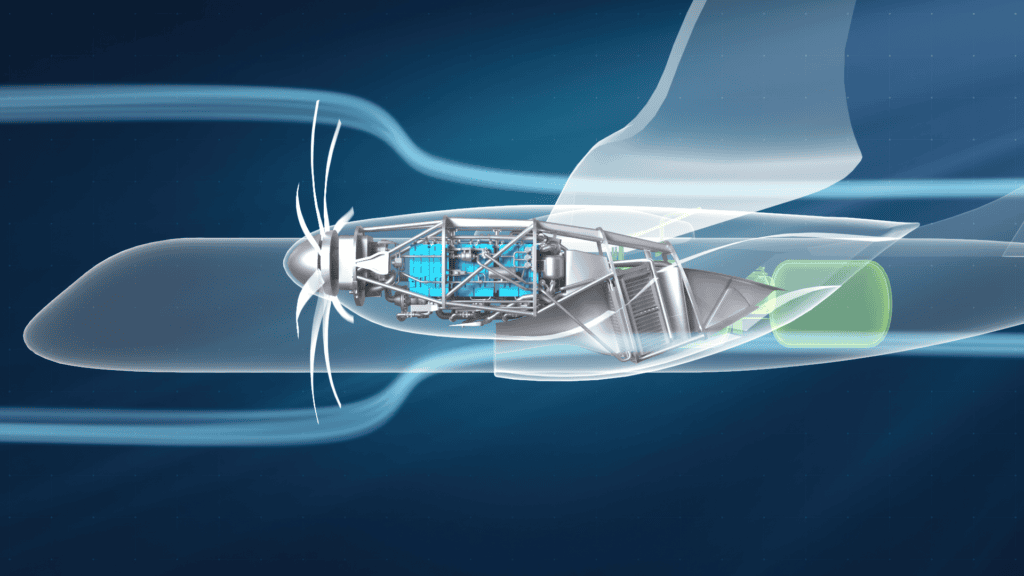
Both Airbus and MTU have pursued hydrogen technology for some years. Airbus revealed its ZEROe hydrogen aircraft concept in September 2020. Since then, it has developed its own hydrogen-electric fuel cell powertrain. This was selected in March 2025 as the preferred technology for the first hydrogen-electric Airbus airliner. This is believed to be a 100+ seater, but other iterations could follow. Multiple tests with the powertrain have been completed at 1.0 to 1.3 megawatt, which is the required output for a single “engine”.
MTU Aero Engines, which is known for its role in the Pratt & Whitney Geared Turbofan (hence the ‘M’ in PW1100G-JM), funded its own Flying Fuel Cell project for regional aircraft. A more powerful version with an output of 1.2MW was developed since 2024 under the HEROPs project, which is part of Europe’s Clean Aviation technology program. RTX Collins Aerospace is one of the partners.
Powerhouse
Bruno Fichefeux, Head of Future Programmes at Airbus, says in the statement: “By pooling our respective technology and expertise into a dedicated entity, we are establishing a European powerhouse capable of transforming advanced research into industrialised, certifiable electric propulsion systems. This new company will help secure strategic sovereignty in the next generation of aviation technologies while strengthening our ability to achieve the long-term ZEROe ambition.”
Stefan Weber, SVP Engineering and Technology at MTU Aero Engines, adds: “Our ambitious goal is to pave the way for a newly developed, safe, reliable and economical propulsion system that will contribute to climate-neutral aviation. This project is a crucial milestone on our path to the first hydrogen-powered engine – and this is true European technology leadership. To that end, we want to create a company that covers the entire life cycle of fuel cell powertrains, from development and testing through certification and commercialisation.”
Commercialisation is the interesting element of this JV, as the two companies intend to share/sell the hydrogen-electric powertrain to others. This is exactly what ZeroAvia had in mind when it launched its own project, but recent financial and organisational issues have cast a shadow over the long-term future of the company in which Airbus was also participating. A strong player in this disruptive segment offers credibility and could accelerate the introduction of hydrogen.
Views: 176