copa 737 9
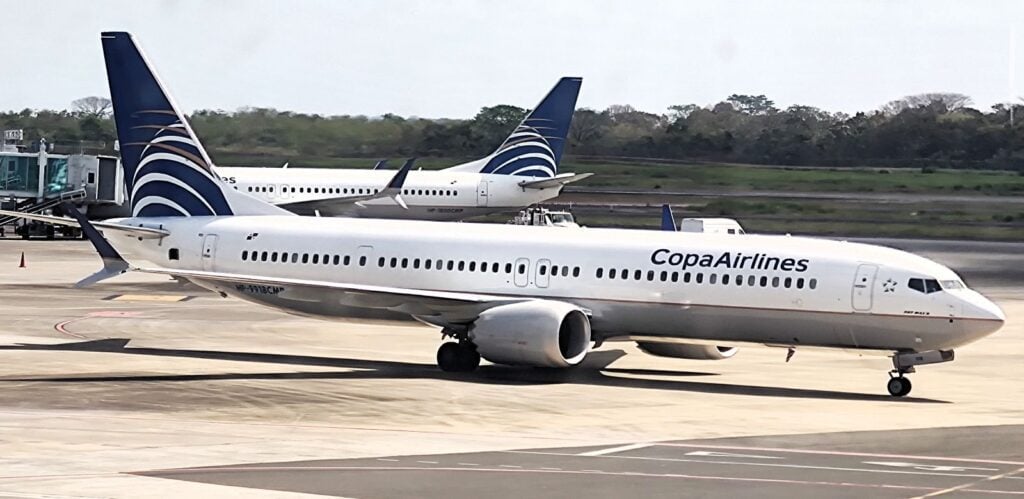
Copa Airlines announced it will offer onboard Wi-Fi service starting in October 2026. The decision, confirmed through the company’s official channels, represents a major shift in the product strategy maintained over the last decade, during which it remained the only major continental carrier in the region without passenger connectivity.
This announcement contrasts with the historical stance of the company’s leadership. Just a few months ago, during the ALTA Airline Leaders Forum in Lima, Copa CEO Pedro Heilbron responded to inquiries about onboard internet by stating it was not in the company’s plans. At the time, the executive used his characteristic style to argue that, since they fly heavily at night, “no one connects at night.” He even added jokingly that they were giving passengers a break and that they thought it was “good for mental health.”
This move is not an isolated event but part of a regional ecosystem where high-speed connection transitioned from a luxury to a competitive standard. According to reports from aviacionline.com, Aerolíneas Argentinas also progressed in this direction through an agreement with Intelsat to equip its fleet with satellite antennas, aiming to maintain a fully connected operation by the end of this year.
The adoption of onboard internet created a clear rift in the market. While full-service carriers like LATAM, Avianca, and now Copa invest millions in satellite infrastructure, ultra-low-cost carriers (ULCC) maintain a firm resistance.
In the case of JetSMART, the airline led by Estuardo Ortiz maintains a cost-efficiency policy that excludes, for the time being, the installation of satellite communication systems. The airline’s vision focuses on “democratizing the skies,” where any additional weight in the cost structure directly impacts the final fare. For operators under this model, the weight of the antennas and the aerodynamic drag they generate represent a fuel expense that price-sensitive passengers are unwilling to finance.
The Ryanair Mirror: Weight, Fuel, and the Starlink Dispute
This Latin American stance finds its global counterpart in Ryanair. The CEO of the European group, Michael O’Leary, recently dismissed the possibility of installing systems such as Starlink on his fleet of Boeing 737s.
O’Leary based his refusal on specific technical data. The executive pointed out that installing an antenna on the fuselage carries a 2% fuel consumption penalty due to additional weight and drag. With a fleet carrying over 180 million passengers annually, that percentage translates to approximately 250 million dollars in extra annual operating costs. For the executive, short-haul passengers prefer low fares over internet connection.
The industry currently debates between two competing technologies:
-
GEO (Geostationary Orbit): Traditional high-altitude satellites that offer stable coverage but with higher latency.
-
LEO (Low Earth Orbit): Systems like Starlink, which promise fiber-optic speeds and minimal latency, allowing for high-definition streaming and video calls.
Copa Airlines did not yet define which technology it will utilize, but its entry into the connected world puts pressure on competitors that remain offline. With the hub in Panama City acting as the primary traffic distributor for the continent, the lack of Wi-Fi became a competitive disadvantage against the connecting flights of North and South American operators.
Views: 182
About The Author

Take AirInsight for a Test Flight
7 days full access — premium analysis and the complete data model library — for $1. No commitment.
Start My Test Flight →