Indigo A321xlr
It has been a rough few weeks for Indigo – indeed for India’s airline sector as a whole, with enough mud to cover everyone from the DGCA on down. But today, something positive.
Launch Details
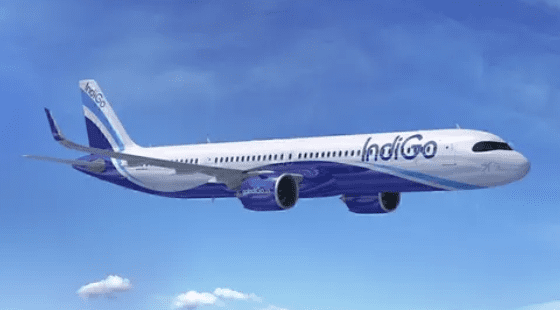
IndiGo is the first Indian airline to induct an Airbus A321XLR into its fleet. The aircraft arrived at Indira Gandhi International Airport, Delhi, on January 7, 2026. IndiGo launched commercial service today with:
- Mumbai-Athens (6E1903/1904): Starting January 23, 2026, 3x weekly
- Delhi-Athens (6E1901/1902): Starting January 24, 2026, 3x weekly
The routes are just over 3,000, and flight times are ~7-8 hours.
Domestic Pre-Launch Training
IndiGo operated the XLR aircraft (VT-NLA) on the Delhi-Mumbai route three times daily each way from January 15-21, 2026, to give crews experience with the aircraft before its international debut. This included familiarization with ovens, new seating, and changed service standards. This is crucial, as several XLRs have experienced tail strikes.
Cabin Configuration
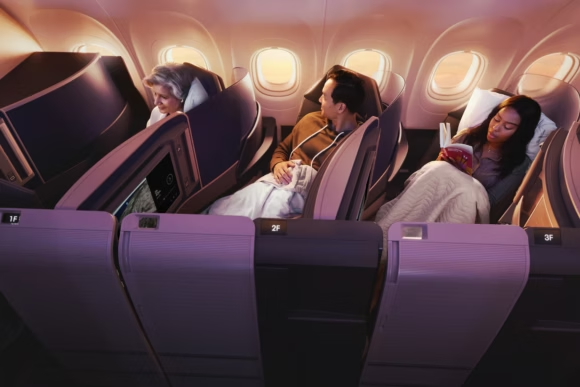
The A321XLR features a more spacious layout than IndiGo’s standard narrowbody fleet with 12 IndiGo Stretch seats (business) in a 2×2 configuration, 44-inch pitch, and 6-inch recline. Then another 183 Economy seats with 31-inch pitch, 5-inch recline, for a total of 195 seats. By comparison, Aer Lingus has 16+168, Qantas has 20+180, and Iberia has 14+168.
IndiGo’s standard A321neos with Stretch seats, used for domestic and regional international flights, have 220 seats: 12 Stretch seats with 38-inch pitch and 212 economy seats with 28.5-inch pitch.
Fleet Plans
IndiGo has a firm order for 40 A321XLRs, with nine deliveries expected in 2026. Some sources indicate the total order is for 69-70 aircraft, potentially making IndiGo one of the A321XLR’s largest customers globally (representing about 12% of the global order book). As we say repeatedly, orders are wishes and deliveries are facts.
Our view on the XLRhas evolved from early excitement. We are increasingly of the view that, with these long stages, service becomes a bigger issue. That toilet/kitchen area at the back of the aircraft is causing problems with cabin traffic flow. Until this gets fixed (how?), we are more sanguine about prospects.
Future Destinations
After Athens, IndiGo plans to deploy subsequent aircraft to Istanbul and Denpasar. The XLR range allows for expansion to other destinations in Europe and East Asia.
A Competitive Angle – Aegean Airlines
The Athens launch isn’t random. Aegean Airlines plans to launch nonstop flights from Athens to Delhi and Mumbai in March 2026 using an A321XLR, but in a lower-density configuration seating just 138 passengers with 24 suites featuring full-flat beds and direct aisle access, and 114 economy seats. Aegean will operate around five weekly flights to Delhi and three to Mumbai. It looks like passengers will have a more comfortable experience on Aegean. Not just premium traffic will take note.
This creates an interesting dynamic: IndiGo offers a no-frills, high-density product targeting price-sensitive travelers, while Aegean offers a premium experience with lie-flat business class. Passengers who aren’t on a budget wouldn’t want to subject themselves to an eight-hour flight on an IndiGo A321XLR if they could instead fly an Aegean A321XLR. Besides, IndiGo is now a tarnished brand. This situation will be monitored by more than these two airlines. The dynamic is central to the XLR’s case.
Strategic Significance
IndiGo CEO Pieter Elbers stated: “IndiGo is honored to be the first Indian airline to welcome the Airbus A321XLR into its fleet — an important milestone as we prepare to redefine long-haul travel for India. The advanced capabilities of this aircraft enable us to reach new regions across the globe and further strengthen India’s position as a key player in international aviation.” IndiGo has a lot riding on this aircraft.
Long Haul School
While developing the A321XLR operation, IndiGo launched long-haul flights starting in July 2025 to Manchester, Amsterdam, Copenhagen, and London Heathrow, using six 787-9s from Norse Atlantic Airways under a damp-lease. This gives IndiGo immediate long-haul experience while awaiting A321XLR deliveries. But the difference between delivering service on a widebody and the XLR is very different. Then again, IndiGo isn’t focused on service levels.
Summary
This evolution represents a fundamental shift for IndiGo from a domestic and regional carrier to a long-haul operator, though maintaining its ultra-low-cost business model with higher-density seating and minimal frills compared to legacy carriers. Fortunately, this industry never ceases to be creative, providing endless review and analysis.
Views: 0