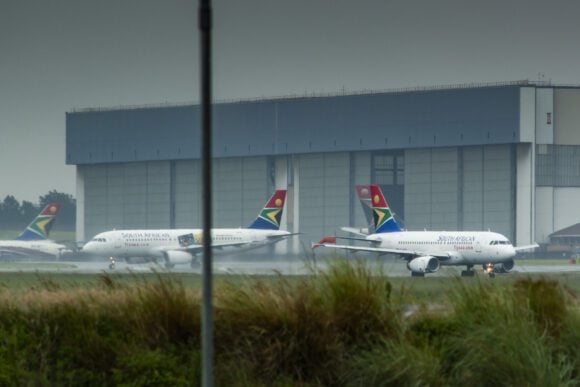
busy airport
Public policy is a blunt instrument. What we are seeing across the United States is yet another example of policy that deserves scrutiny.
Airport security in the U.S. is not failing operationally—it is exposed structurally to political risk unrelated to aviation. Federalization plus shutdown politics is an unstable combination.
Take AirInsight for a Test Flight
7 days full access — premium analysis and the complete data model library — for $1. No commitment.
Start My Test Flight →The ongoing Department of Homeland Security shutdown has delivered, for the third time in six months, the same lesson: Transportation Security Administration workers have gone without pay, hundreds have quit, and security wait times at some airports have exceeded 100 minutes. Absentee rates hit 30% at JFK, 35% at Houston Hobby, 37% in Atlanta, and 39% in New Orleans on a single day in March 2026.
This is not a staffing crisis. It is a structural one.
The Core Problem: Political Risk in an Operational System
When airport security is a federal function, it becomes a bargaining chip in budget negotiations that have nothing to do with aviation.
The current shutdown stems from a partisan fight over immigration policy. Yet one of its most visible consequences is chaos at airport security checkpoints. This kind of disruption goes back a long time.
Passengers standing in hour-long lines during spring break are collateral damage. The TSA was simply in the building when the political grenade went off.
A privately operated workforce, contracted by airports or airlines, would not be exposed to congressional funding lapses. It would be paid under commercial agreements with service-level guarantees—not federal appropriations subject to political brinksmanship.
Federal Employment and Fragility
In 2025, TSA screened over 906 million passengers, including eight of the ten busiest travel days on record. Yet it cannot reliably retain its workforce.
More than 1,100 officers left in just two months late last year—a 25% increase year-over-year—many citing financial instability.
The workforce is now unionized, federally protected, and politically sensitive. That makes reform difficult. Any move toward privatization would trigger labor resistance, congressional backlash, and short-term disruption that could exceed the pain of the shutdown itself.
This is not just a policy question. It is a question of political feasibility.
Meanwhile, the federal employment model guarantees back pay—but offers no protection in the moment. Workers take on debt, seek second jobs, and risk financial instability that can even threaten their security clearances.
A commercial employer could not operate this way. It would face immediate staffing collapse, breach its contracts, and lose business. Accountability would be direct and fast.
The Model We Already Tested
Before the creation of the TSA after the September 11 attacks, airport security was handled by private contractors under federal oversight. That system had flaws—but the post-9/11 shift to federalization was a political response to a broader intelligence failure, not simply a workforce problem.
Today, the Screening Partnership Program allows airports to opt out of TSA staffing and use private contractors under federal standards. Airports like San Francisco have done so successfully.
But only about 20 airports participate. Many large hubs have declined. Costs are inconsistent. And the TSA still sets procedures, trains screeners, and oversees compliance.
In practice, the U.S. has already tested privatization—but only in a constrained, hybrid form. This is outsourced labor, not a fundamentally different system.
Who Owns the Risk?
This is the core issue.
In a zero-tolerance system, failure carries national consequences. Even under a privatized model, the federal government—and the TSA—would still bear ultimate responsibility.
That reality shapes everything. It explains the bias toward redundancy, rigidity, and overstaffing. It also explains why efficiency is not the primary objective.
Efficiency vs. Security
Private operators optimize for cost and throughput. But governments optimize for risk minimization—even at the expense of efficiency.
The post-9/11 doctrine is simple: false positives are acceptable; false negatives are not.
Privatization could improve passenger flow. But it could also reintroduce cost pressures that conflict with a zero-failure security philosophy.
International Comparisons—With Caveats
Countries like Germany and the Netherlands rely on private security operators under government oversight and maintain strong safety records.
But those systems operate under:
- Different labor frameworks
- Different legal liability regimes
- Less adversarial political funding structures
And crucially, they do not face U.S.-style shutdown dynamics tied to appropriations. The real issue is not just the TSA. It is the way U.S. fiscal governance injects political risk into operational systems.
A Less Radical Fix?
Privatization is one answer—but not the only one.
A more immediate solution would be to treat airport security like air traffic control under the Federal Aviation Administration:
- Fully funded
- Protected from shutdowns
- Supported by multi-year budgeting or a trust fund model
Ring-fencing the TSA payroll would address the core vulnerability without redesigning the system.
The Other Side
The counterarguments matter.
Critics of privatization point to mixed results under the Screening Partnership Program, the risk that cost-cutting could degrade security quality, and the role that pre-9/11 contractor dynamics may have played in systemic vulnerabilities.
Security culture is shaped by incentives. A contractor paid to control costs may not behave the same as a federal agency tasked solely with risk reduction.
There is also concern that private operators could resist security upgrades that increase costs—something less likely when the regulator and operator are the same entity.
Bottom Line
The current crisis makes one thing clear:
- Airport security in the United States is operationally functional—but structurally exposed.
- The question is not simply whether screening should be public or private.
- It is whether a critical aviation function should be vulnerable to political funding shocks at all.
- Privatization may be part of the answer. Structural funding reform may be another.
What is no longer defensible is the status quo.
Views: 218
About The Author


Take AirInsight for a Test Flight
7 days full access — premium analysis and the complete data model library — for $1. No commitment.
Start My Test Flight →