Embraer has concluded its fiscal year 2025 by executing a fundamental balance-sheet restructuring, transitioning from a post-pandemic recovery phase into a robust net cash position of $109.3 million. The results, released on March 6, reveal a company that has utilized rigorous liability management to insulate itself from market volatility while capturing record demand in the regional jet and executive markets.
This financial transformation was not merely a defensive maneuver; it was a calculated effort to “put the house in order” before launching an aggressive global expansion into high-stakes markets like India and the United States. By extending its debt runway and lowering its cost of capital, Embraer has effectively traded its pandemic-era survival shield for a financial sword, positioning itself as the primary challenger in the 100-150 seat aircraft segment.
The defining achievement of the fiscal year was a radical extension of the company’s debt profile, a move that Chief Financial Officer Antonio Carlos Garcia described as a core strategic objective for long-term stability. Through a series of liability management initiatives fully executed in the latter half of the year, Embraer increased its average loan maturity from 3.7 years to 9.1 years in a single fiscal cycle. This shift is architecturally superlative: currently, 96% of the company’s debt is classified as long-term, which provides the executive team with unprecedented financial flexibility.
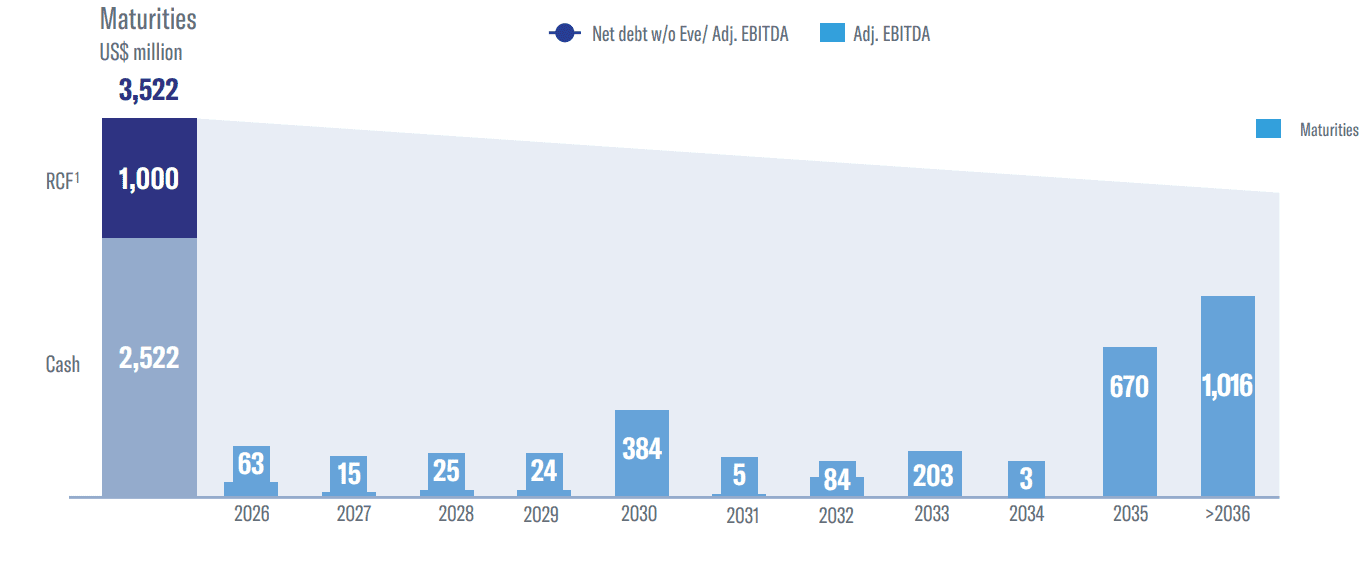
“Today, 96% of our debt is long-term, which provides us with financial flexibility,” Garcia explained during the earnings conference call. He further highlighted the success of these actions in reducing the ongoing cost of capital, stating, “Importantly, these actions also led to a reduction in our average cost of debt, which declined to 5.5% from 6.2%, further strengthening our financial program”. This financial de-risking has allowed the company to reach a net cash-to-EBITDA ratio of 0.1x, ensuring it remains “well prepared to navigate potential volatility ahead” and effectively decoupling its growth plans from short-term interest rate fluctuations.
This newfound stability is further reinforced by the company’s strong consolidated cash position, which stood at $2,914.7 million as of the end of the fourth quarter of 2025. This liquidity is bolstered by a $1.0 billion undrawn Revolver Credit Facility (RCF), providing a buffer that far exceeds the company’s short-term obligations. The focus on financial discipline was a recurring theme throughout the presentation, with Garcia reminding stakeholders that the company “has delivered its financial estimates year in year out till 2021, reflecting a disciplined approach to planning and execution”.
Granular Accounting: Normalizing the Path to Profit
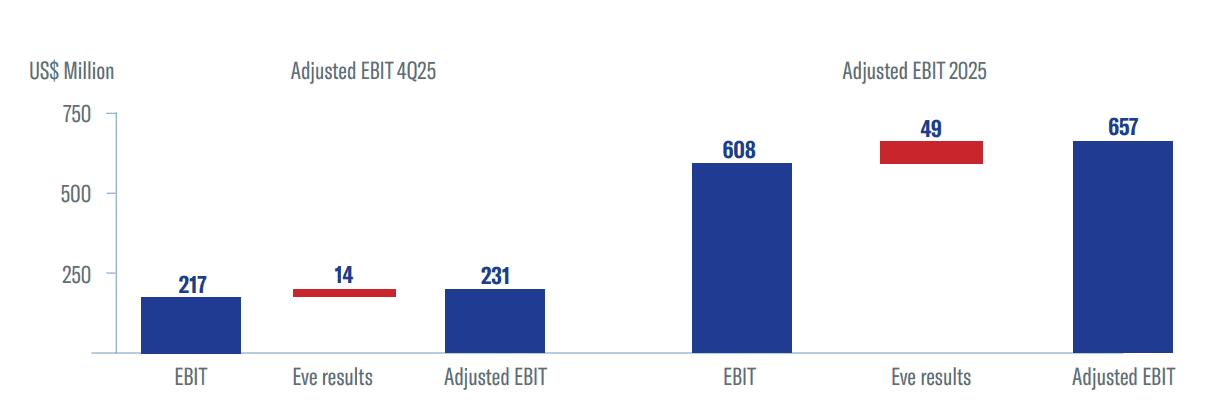
The 2025 results also reflect a calculated effort to stabilize the company’s accounts by managing non-monetary assets and complex tax liabilities. To arrive at an adjusted net income of $252.9 million, the company performed major accounting normalizations to strip away “one-time” effects and non-cash volatility. This included the exclusion of $136.5 million in negative deferred taxes, which are non-cash items required under IFRS to record tax effects from exchange rate changes on assets such as inventory, intangibles, and property, plant, and equipment (PP&E).
Furthermore, the company adjusted for $37.5 million in losses from its eVTOL subsidiary, Eve, and $32 million in non-recurring infrastructure costs related to facilities upgrades in 2025. By removing these items, management presented a clearer view of its operational core. Francisco Gomes Neto, President and CEO, specifically addressed the impact of U.S. import tariffs, which totaled $54 million for the full year. He welcomed the recent exemption granted on February 24, 2026, stating, “We welcome the level playing field in our industry, since Embraer was the only manufacturer to pay tariffs on aircraft exports before, and this outcome will benefit our US customers”.
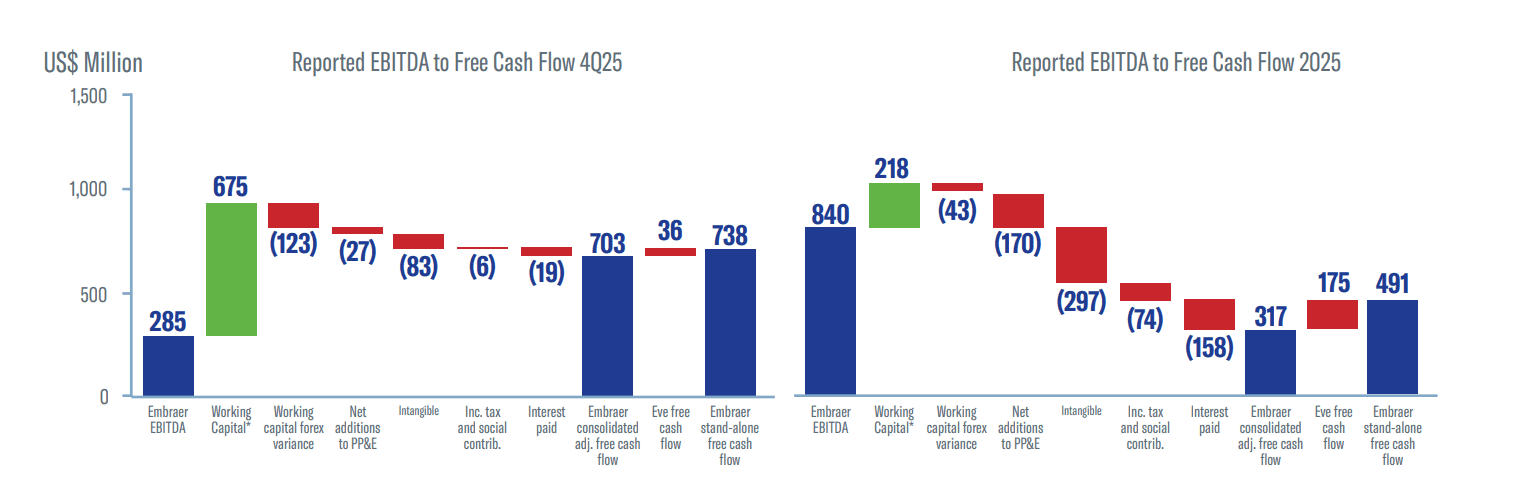
This “inventory clean-up” is a critical tailwind for the coming years. Embraer’s inventory rose to $3.27 billion, an increase of $333 million intended to support the higher delivery targets set for 2026. Within this inventory, the company identified $25 million where 10% tariffs had already been paid. CFO Garcia noted that as this inventory is delivered, approximately two-thirds of the margin benefit from the tariff removal will be realized in 2026, with the remaining third providing an upside for 2027.
The “Shadow Backlog” and Demand Velocity
This financial stabilization occurred alongside a period of record commercial demand that has outpaced the broader industry’s recovery. The company’s firm backlog reached an all-time high of $31.6 billion, a 20% year-over-year increase that provides “strong visibility” for the next several years of production. The Commercial Aviation segment reported an exceptional 2.8 to 1 book-to-bill ratio, fueled by 157 new firm orders for the E2 family and 140 options.
Gomes Neto highlighted this momentum as a structural shift: “At the company level, our record revenue and backlog provide strong visibility to investors about our ability to deliver sustainable growth for many years to come”. Beyond the firm backlog, customers hold approximately $20 billion in options, which management refers to as the “shadow backlog”. Garcia noted the potential here, stating that as these options are exercised, they “could support a significant expansion of our backlog, potentially appropriate towards $50 billion over time”. He also added that “the current backlog reflects a more attractive customer mix, which positions the company for a more favorable from margin profile perspective over time”.
Strategic Alliances: The “Complementary” Defense Strategy
With its internal “financial house” in order, Embraer has shifted toward an external offensive through strategic global partnerships that extend the reach of its defense and commercial products. In the United States, an MOU with Northrop Grumman aims to integrate autonomous boom refueling and agile combat employment solutions into the KC-390 Millennium. Gomes Neto explained the intent behind this move, aiming to avoid direct friction with domestic giants: “Our strategy is based on the premise that it does not compete with the KC-46 or any other strategic tanker, but rather it’s a complementary capability… if we get a sizable order, these aircraft will be assembled and produced in the US”.
In India, Embraer is collaborating with the Mahindra Group on the Medium Transport Aircraft (MTA) program and with the Adani Group for regional civil aviation. Gomes Neto expressed excitement about these opportunities, noting that “we expect an RFP from the customers still this year” for the MTA program, which could involve between 40 and 80 aircraft.
For the civil aviation front, the CEO set a bold timeline: “We have said that if we get orders still in 2026, we can do the rollout of jets by 2028 in India”. When consulted if the intended E175 production line will be solely focused on E1 series or a potential transition to E2 -provided certification is achieved- would be on the table, the CEO was direct: “our plan is to build E1s”.
The Service & Support segment grew 18% in 2025, reaching a backlog of $4.9 billion. This segment is anchored by a $105 million investment in the OGMA GTF engine shop in Portugal, which services Pratt & Whitney Geared Turbofan engines.
While the initial ramp-up phase slightly pressured the segment’s adjusted EBIT margin (down from 16.5% to 15.5%), it is a critical long-term cash engine. Garcia remarked on this growth trajectory: “It’s growing faster than the aircraft divisions because we have other contracts as well… I would say more than double digit for service and support to move forward for the next few three years”. The facility is expected to reach a full ramp-up by 2030, contributing an estimated $650 million in annual revenue.
Operational Outlook for 2026
For the 2026 fiscal year, Embraer projects revenues between $8.2 billion and $8.5 billion, representing a double-digit growth rate at the midpoint. The company anticipates an adjusted EBIT margin of 8.7% to 9.3%. Notably, this outlook remains conservative as it assumes a 10% U.S. import tariff is still in effect. Garcia stated that they prefer a “conservative approach at this point in time because of decreased policy uncertainty” and want to “wait for additional visibility before making any changes to our output”. Delivery targets are set at 80 to 85 commercial aircraft and 160 to 170 executive jets, as the company prepares to reach the 100-delivery milestone in Commercial Aviation by 2027 or 2028.
By trading its pandemic-era “survival” stance for a fortress-like financial structure, Embraer has positioned itself as the primary challenger in the regional and multi-mission segments. With a 9.1-year debt runway protecting the balance sheet and a potential $50 billion backlog waiting in the wings, the company has transformed its financial discipline into a strategic weapon. As Gomes Neto concluded in his final remarks, “2025 clearly marked the consolidation of our strategy across all businesses,” preparing the company for “more ambitious long-term expansions, supported by a new generation of products and technologies”.
Views: 168
About The Author

Take AirInsight for a Test Flight
7 days full access — premium analysis and the complete data model library — for $1. No commitment.
Start My Test Flight →