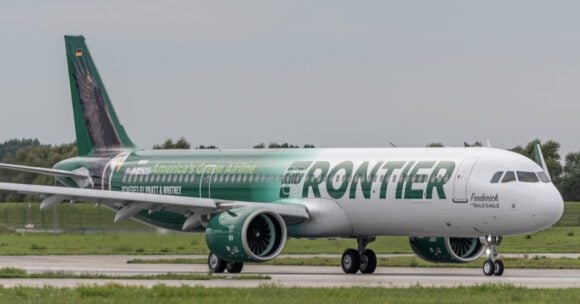
Friday’s court ruling that orders American Airlines and JetBlue to unwind their Northeast Alliance within thirty days must have set alarm bells ringing with JetBlue. Although both airlines will lose out, JetBlue seems the most vulnerable. And if the Court ruling is a prerequisite of what the same Massachusetts Court will decide later on the JetBlue-Spirit Airlines acquisition, JetBlue could find itself in serious trouble. NEA court ruling must set alarm bells ringing at JetBlue. Check out what JetBlue said in February in its 2022 annual report on the court case that what filed by the Department of Justice against the NEA, which was still pending at that moment: “An adverse ruling could adversely impact our ability to achieve the intended benefits of the NEA and could have an adverse impact on our business, financial condition, and results of operations. Additionally, we are incurring costs associated with implementing operational and marketing elements of the NEA, which would not be recoverable if we were required to unwind all or a portion of the NEA.” Here we are in May, and the unwind scenario is very close to becoming a reality unless an appeal by both American and JetBlue would be successful. But based on the Sherman Antitrust Act, the District Court of Massachusetts has had strong arguments when it said that the two carriers are permanently enjoined from continuing the NEA: “The NEA, operating as it was designed and intended by American and JetBlue, substantially diminishes competition in the domestic market for air travel. It does so by combining the Boston and New York operations of two airlines that are among the most significant competitors in that region. These two powerful carriers act as one entity in the northeast, allocating markets between them and replacing full-throated competition with broad cooperation.” Losing a business model Apart from the unrecoverable costs of unwinding the alliance for both airlines, American and JetBlue are losing the joint revenue model that has helped them very well. Last year, 75 percent of JetBlue’s growth has been coming from the NEA. Again, the 2022 annual report offers a good insight into the airline’s route structure and the significance of the alliance. On the New York metropolitan area, its hometown, the report says: “Approximately one-half of our flights originate from or are destined for the New York metropolitan area. JFK is New York's largest airport, and we are the largest airline at JFK as measured by domestic seats. Our 2022 operations accounted for 39 percent of seats offered on domestic routes from JFK." "At the end of 2022, we served 89 nonstop destinations from JFK. New Jersey's Newark Liberty International Airport, or Newark, New York City's LaGuardia Airport, or LaGuardia, and New York's Westchester County Airport, or White Plains. In 2023, through the NEA with American, we expect to offer nearly 500 daily departures in New York.” Boston is also a key airport within the NEA. “We are the largest carrier at Boston measured by domestic seats. At the end of 2022, we flew to 74 nonstop destinations from Boston and our operations accounted for 28 percent of all seats offered in Boston. We began service between Boston and London in August 2022. Together with American, the NEA will offer nearly 200 daily departures at Boston.” As the Court has stated, the joint operations are not in the interest of consumers and erode competition in the key Northeast markets. Without NEA, both American and JetBlue will have to rethink their strategy. Will there be a war on ticket prices and fierce competition? Likely so. Will this hurt airlines? Definitely, with JetBlue to be exposed more as it could suffer from reduced revenues without NEA. The deal with Spirit Airlines Although an entirely different case, the Court’s ruling in favor of the Department of Justice casts a shadow on the lawsuit against the JetBlue-Spirit merger plan. The common dominator here is competition. Just as the DoJ said that the NEA would contravene antitrust rules and reduce competition, it thinks that the $3.8 billion takeover of Spirit by JetBlue will hurt competition and eliminate the fastest-growing ultra-low-cost carrier in the US. In the complaint filed on March 7 with the District Court of Massachusetts, the Department said: “If the acquisition is approved, JetBlue plans to abandon Spirit’s business model, remove seats from Spirit’s planes, and charge Spirit’s customers higher prices. JetBlue’s plan would eliminate the unique competition that Spirit provides—and about half of all ultra-low-cost airline seats in the industry—and leave tens of millions of travelers to face higher fares and fewer options. Spirit itself put it simply: “A JetBlue acquisition of Spirit will have lasting negative impacts on consumers.” This acquisition violates Section 7 of the Clayton Act and should be enjoined.” "Too many red flags" It is a reference to what Spirit said in the heated fight last year when Spirit initially favored Frontier Airlines as its preferred partner over JetBlue and used all arguments to say why a deal with JetBlue would be bad for competition. Spirit said that there would be too many red flags to support a deal with JetBlue, with the two airlines being too different. Ticket prices would go up, fifty percent of ULCC competition slashed in the US, and there will be anticompetitive effects on some 150 routes. This could affect thirty million customers. Only at the last moment, Spirit stakeholders changed their minds, ditched Frontier, and opted for JetBlue on July 28. JetBlue has consistently said that the opposite is true and that with a Spirit takeover, the two combined airlines will continue the ‘JetBlue effect’ that sees fares drop every time JetBlue has entered a new market. Although JetBlue had to admit that fares dropped even further when Spirit entered that same market. The overall concern of the DoJ is that competition will dampen of the merger is approved, while reducing the number of seats on Spirit aircraft by ten to fifteen percent will result in higher fares. How will 'competition' be weighed? JetBlue CEO Robin Hayes said the JetBlue-Spirit merger is nothing like Pepsi buying Coca-Cola and that the two airlines will only have an eight to nine percent market share, with Delta, United, American, and Southwest having eighty percent of the market. But with competition the key factor in the NEA Court ruling, Hayes must start getting serious concerns that the JetBlue and Spirit merger could be blocked for reasons of competition too. It's too early days to tell what will happen if JetBlue also loses the Spirit acquisition. Is Frontier still interested in Spirit and could they conclude an agreement, becoming the fifth force in the US airline industry? Can JetBlue grow enough by itself by being ‘turbocharged’ by Spirit, as it said last year? Is JetBlue becoming vulnerable to a take-over bid itself, or does the NEA court ruling (and a potential block of the JetBlue-Spirit merger) reduce the appetite for more consolidation? Many questions, but for now they remain unanswered.