


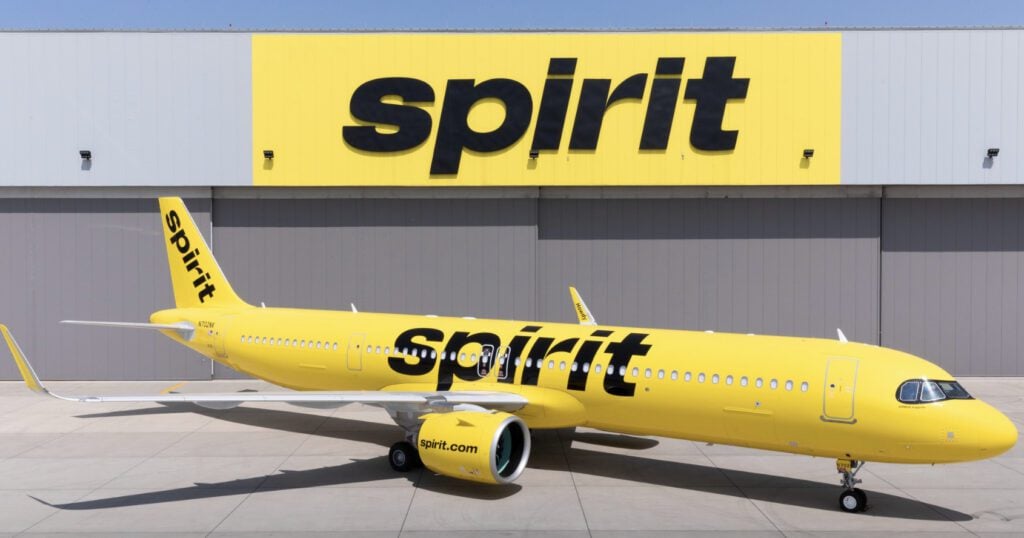
Spirit Airlines emerged from Chapter 11 in March 2025—just four months after filing—becoming the first major U.S. airline since 2011 to use bankruptcy protection to reset its business. What has unfolded is one of the most dramatic restructurings in the modern U.S. low-cost sector, leaving the airline far smaller, financially reworked, and with an untested plan to reinvent its brand.
Below is a picture of what Spirit has actually done—what it gained, what it lost, and what its recovery will truly require.
Timeline and Status Spirit emerged from Chapter 11 bankruptcy in March 2025, just four months after filing in November 2024. The airline became the first major U.S. carrier to enter bankruptcy since 2011.
Financial Restructuring Details: The reorganization plan includes the following key components:
- Converting $795 million of existing debt into equity, significantly reducing the airline’s debt burden
- Receiving a $350 million equity investment from existing investors to support future initiatives
- Issuing $840 million in new senior secured debt to existing bondholders with more favorable terms
- Securing a new revolving credit facility of up to $300 million for additional liquidity
Fleet Reduction Spirit’s post-bankruptcy vision is dramatically smaller—the airline once operated a 230-strong fleet of Airbus narrowbodies but has now been overtaken by Allegiant Air, which operates 124 aircraft compared to Spirit’s 117 jets currently in service. The airline has been aggressively rejecting leases on dozens of aircraft to right-size its operations. This is not a trim—it’s a radical contraction.
Engine Compensation International Aero Engines (Pratt & Whitney) agreed to provide Spirit $140 million in compensation for prior losses related to grounded jets requiring Pratt & Whitney geared turbofan engine inspections and repairs, along with ongoing access to spare engines.
Rejected Merger In February 2025, Spirit rejected Frontier Group’s latest merger offer for the third time, stating it was less beneficial than the airline’s restructuring plan and would result in extended and more costly bankruptcy proceedings. Frontier’s owner, Indigo Partners, has shown interest in Spirit before.
Future Strategy Spirit plans to rebrand itself as a premium low-cost carrier, shifting away from its no-frills image while maintaining affordable fares. However, specific details of this transformation remain unclear. The airline’s previous stock was canceled, and newly issued shares are trading over-the-counter while the company seeks to relist on a major exchange.
Shrinking to Profitability?
Can an airline shrink its way to profitability? After all, this is an industry that consolidates to seek economies of scale. The short answer is: yes, but it’s rare and usually requires more than just shrinking.
Here are notable success stories:
Delta Air Lines (2005-2007) Delta filed for Chapter 11 in 2005 and used the bankruptcy to significantly reduce operating costs, primarily through labor cost reductions by renegotiating collective bargaining agreements and restructuring pension obligations. The airline also restructured its fleet, eliminated unprofitable routes, added profitable international routes, and cut its debt by $7.6 billion—about half of its outstanding debt at the time. Delta emerged profitable and is now one of the world’s most successful airlines.
American Airlines (2011-2013) American filed for Chapter 11 in 2011, then merged with US Airways in 2013 to create the largest airline in the United States. Following the merger, American operated over 6,800 flights per day, served 357 destinations across 61 countries, and in 2024 carried 226.4 million passengers. However, this wasn’t just shrinking—it was shrinking plus strategic growth through merger.
Philippine Airlines (2021) Philippine Airlines filed for Chapter 11 in September 2021, returned nine aircraft to lessors as part of downsizing, and emerged from bankruptcy by late 2021. Post-restructuring, PAL has far less debt and is now ordering cutting-edge Airbus A350-1000 jets and expanding flights, even launching a pilot hiring spree for 1,500 new positions in 2023.
The Key Pattern: Airlines that successfully shrink typically combine fleet reduction with:
- Debt restructuring (wiping out billions in obligations)
- Labor cost cuts (renegotiating union contracts)
- Network optimization (cutting unprofitable routes while strengthening profitable ones)
- Strategic positioning (finding a profitable niche or market advantage)
Why It’s So Difficult
Airlines have enormous fixed costs—regardless of size, you need pilots, gates, maintenance facilities, and headquarters. Shrinking doesn’t proportionally reduce these costs, which is why Spirit’s plan to go from 230 aircraft to potentially 88-106 is so risky. There are concerns that Spirit will carry too much of the overhead structure sized for a larger airline while generating less revenue, which is why successful shrinks include several other issues.
The success stories involved not just shrinking, but fundamentally restructuring the cost base and finding a sustainable competitive position. Spirit’s challenge is whether it can do this in an already brutally competitive low-cost market.
Moreover, the internet has lots of videos of Spirit’s customers behaving very poorly – at airport gates and on board. Example 1, and here’s a long list from YouTube. But for the violence and language, some of this is funny.
How Spirit plans to rebrand itself as a premium low-cost carrier after its well-documented history of bottom-fishing will be, to be exquisitely polite, challenging. The airline has not yet explained:
- What does “premium” mean in practice?
- Whether, and how, its current cabin layout will change.
- How will it differentiate itself from JetBlue, Alaska, or even Delta Basic?
Brand credibility in a service business is job #1.
Views: 556
About The Author


Take AirInsight for a Test Flight
7 days full access — premium analysis and the complete data model library — for $1. No commitment.
Start My Test Flight →

There is ABSOLUTELY no way Spirit can survive as a standalone airline and make a profile. Just my 2 cents.