

Frontier’s Q1 results will draw more attention than usual due to the recent shutdown of Spirit Airlines. The narrative centers on two competing forces: the structural upside from Spirit’s exit and the near-term pressure from spiking fuel prices. Early retirement of older A320neo aircraft is a manageable cost, offset by deliveries of newer, more standardized models.
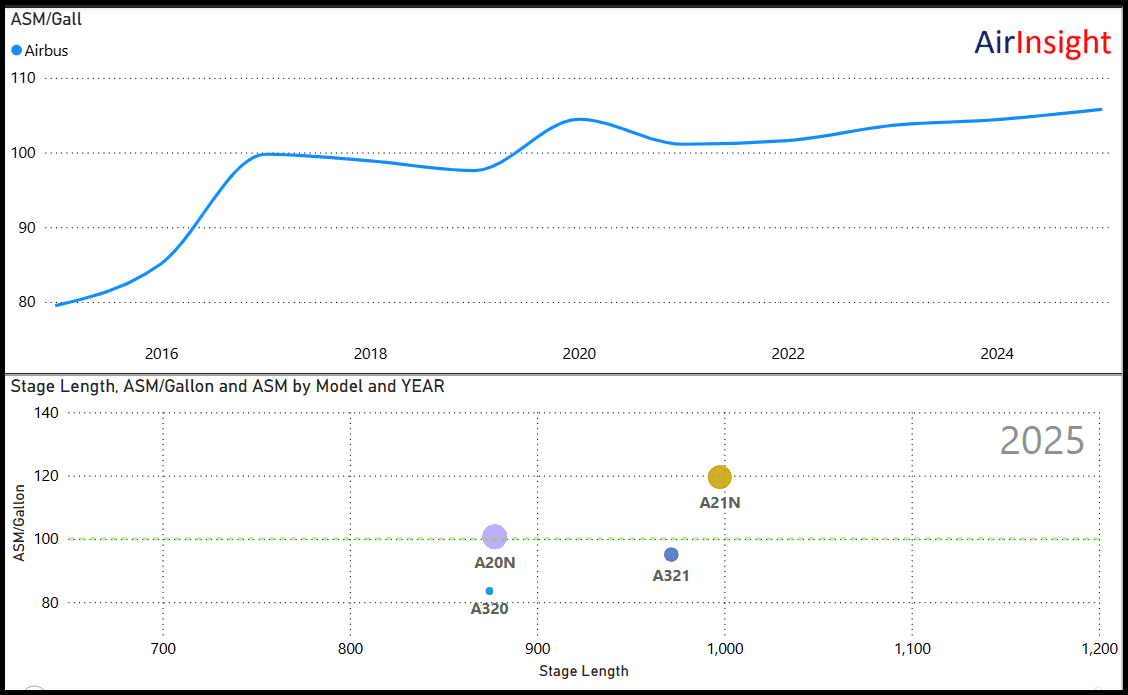
The charts below (from 2025 data) remain highly relevant — no other U.S. airline matches Frontier’s fuel efficiency. In a fuel-price-spike environment, this advantage becomes even more valuable. The improved fuel burn from the newer models is impactful.
Highlights
- Total Operating Revenue: $992 million, an increase of 9% yoy.
- GAAP Net Loss: $272 million ($1.18 per share).
- Adjusted Net Loss: $68 million ($0.30 per diluted share).
Operational Metrics
- Capacity (ASMs) decreased by 1% compared to the prior year.
- Daily utilization declined by 12%, despite a 14% increase in the number of aircraft in service.
- RASM (stage-length adjusted): Strong double-digit growth (adjusted RASM up ~17-18% YoY to 10.86 cents; at the high end of prior guidance). Load factor rose +3.5 pts to 78.4%.
- Fare revenue per passenger rose 21%, while ancillary revenue per passenger declined 9%.
- Liquidity: The company ended the quarter with $974 million in total liquidity.
Fleet & One-Time Items
Results included a $139 million non-recurring charge related to an early return agreement for 24 A320neo aircraft (CFM LEAP-powered, sourced from AerCap). These retirements addressed non-recoverable capitalized maintenance balances. Essentially, Frontier is walking away from the maintenance value baked into those LEAP engines to avoid the higher cash costs of frequent shop visits over the next 2–8 years.
Frontier continues to take delivery of A320neos and A321neos powered by Pratt & Whitney GTF engines, improving fleet standardization with its existing A321neo fleet.
At quarter-end, Frontier operated 183 aircraft — among the youngest and most fuel-efficient in the U.S., delivering ~106 ASMs per gallon (best-in-class and roughly 40% more efficient than major carriers). With 2Q fuel projected at $4.25 per gallon, a legacy carrier burning fuel at 60–70 ASMs/gal sees its CASM explode. Frontier’s higher density (240 seats on the A321neo) and younger fleet act as a structural hedge. Even with high fuel prices, Frontier’s “fuel-burn-per-seat” remains the lowest in the US.
The Spirit Impact
The demise of Spirit Airlines is likely a relief for Frontier. Frontier had tried several times to make a deal with Spirit, with no success.
Frontier’s current strengths (pricing power, demand, revenue management, and moderating industry capacity) were the clear highlight and more than offset cost pressures in the adjusted numbers. The GAAP hit was expected from previously disclosed fleet optimization and the TSA item. But removing Spirit now leaves Frontier as the most impactful ULCC.
Frontier already serves 100+ former Spirit routes and is well-positioned for summer peak gains. This dynamic drove pre-earnings buying in ULCC names (including ULCC) in the days leading up to the earnings report. The “Spirit Impact” is already evident in the 21% jump in per-passenger fare revenue.
Without Spirit’s aggressive floor pricing in markets like Florida and Las Vegas, Frontier is finding it easier to raise base fares to offset the fuel spike. It suggests that Frontier isn’t just taking Spirit’s passengers; they are successfully dismantling the “race to the bottom” pricing that Spirit used to anchor in key markets. This rise in the tide actually helps the entire industry.
Allegiant Looms?
The only lower-cost threat is Allegiant’s 737 MAX 8-200. As of May 2026, Allegiant Air has 16 737 MAX 8-200 in operation, with nine more scheduled for delivery throughout the remainder of the year.
It is also worth noting that Allegiant’s planned acquisition of Sun Country will add 69 Boeing 737s to its fleet. While these include older NGs (737-800s), it gives Allegiant the maintenance and pilot infrastructure to scale the MAX 8-200 even faster.
Allegiant claims the MAX 8-200 provides a 20% improvement in fuel burn over their current Airbus fleet. Combined with the high density, it allows Allegiant to approach Frontier’s unit costs, particularly on mid-range “leisure-to-leisure” routes. Here’s the proof. The MAX 8-200 is making a huge impact at Allegiant. The data shows the MAX 8-200 at 104 ASM/gallon, compared to 106 for Frontier’s Airbus fleet.
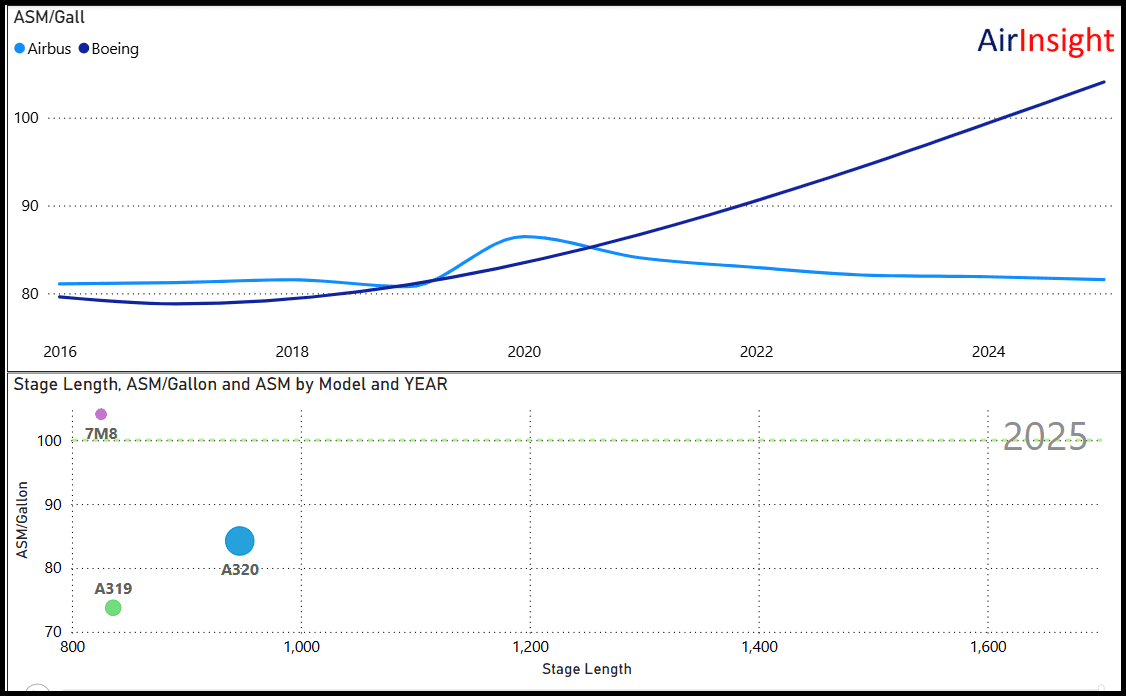
Frontier currently holds an “efficiency moat” with its 106 ASMs/gallon; Allegiant’s MAX 8-200 is the first legitimate tool that allows a competitor to play Frontier’s own game. However, with only 16 units in service against Frontier’s much larger neo fleet, Allegiant’s impact is still geographically limited to its primary bases, such as Orlando Sanford (SFB) and St. Pete (PIE). Even if the threat is small now, it won’t stay that way.
Bottom Line
Early market sentiment is mixed but tilts constructive. Bulls emphasize structural pricing power and the multi-quarter Spirit catalyst. Bears highlight near-term cost and fuel math. Overall, this report shows clear progress on the turnaround: disciplined capacity, strong unit revenue trends, and a unique competitive opening. The most fuel-efficient fleet in the U.S. limits the impact of the current spike — and the absence of Spirit should support higher utilization and market-share gains going forward.
Forward Guidance
For the second quarter of 2026, Frontier projects an adjusted loss per share between $0.45 and $0.60. The company anticipates capacity growth of 6% to 8% and RASM growth of over 20% compared to the same period in 2025, while accounting for elevated fuel costs estimated at approximately $4.25 per gallon.
The items of concern are:
- Fuel volatility remains a wild card (2Q guidance assumes a sharp spike).
- Utilization drag from rightsizing will take a quarter or two to normalize.
- One-time charges will continue to pressure reported numbers.
The airline deploys the most fuel-efficient US fleet. The fuel cost spike hurts, but hurts competitors more. The absence of Spirit means Frontier might see higher utilization as it exploits market opportunities. The constructive sentiment is based.
Views: 241