Noisy Neighbors?

NOT WITH GAME CHANGING AIRCRAFT AND ENGINE TECHNOLOGY

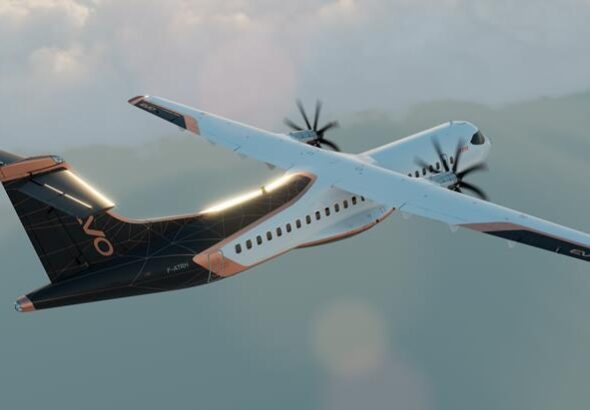
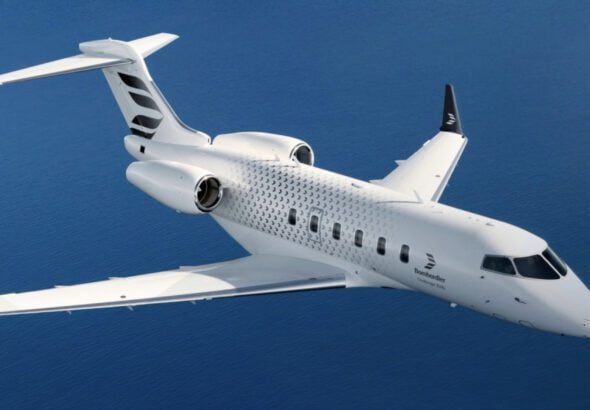
The introduction of the Bombardier CSeries in 2014 will bring the first application of the next generation of engines for narrow-body aircraft, the Pratt & Whitney PurePower 1000G geared turbofan.  The combination of a new engine and an advanced high technology airframe will generate a very substantial change in the environmental impact of airplanes, the largest we’ve seen since the first generation noisy cigar tube engines were replaced by high bypass engines in the 1980s.  [Read more...]

The Coming Bubble in Narrow-Body Aircraft

Airlines and aircraft manufacturers periodically get into trouble when they over-commit to new aircraft and the OEMs raise production rates to levels that are unsustainable. We believe that another bubble situation is currently developing, and will result in an oversupply of narrow-body aircraft, lower residual values, earlier retirements of current generation aircraft, and will negatively impact the leasing market. [Read more...]

Etihad Airways invests in Jet Airways and forms strategic alliance

Etihad Airways, based in Abu Dhabi, has completed an investment in India’s Jet Airways for a 24% equity stake.  That stake, resulting in an investment of US $379 million, creates another “equity alliance” for Etihad, modeled after their equity investments in Air Berlin and Aer Lingus.  This transaction has been enabled by a relaxation of India’s formerly quite strict rules on foreign direct investment in airlines, and may lead to further foreign investments in this sector.

images-1

images

This alliance will create significant benefits for both carriers, as it opens Etihad to 23 cities in India, and provides Jet Airways passengers connection possibilities to the US, Europe, Middle East and Africa that were previously unavailable.  Etihad flies to 88 destinations, Jet to 77, and eliminating duplicates, they combine into a 140 unique destination network.

James Hogan, Etihad Airways, indicates that the investment and joint ventures are “expected to bring immediate revenue growth and cost synergy opportunities, with our initial estimates of a contribution of several hundred million dollars for both airlines over the next five years.”  He indicated that “the Indian market is fundamental to our business model of organic growth partnerships and equity investments.”

Naresh Goyal, CEO of Jet Airways, stated that the company was “extremely happy to be in a partnership with an airline that shares our customer-centric operational philosophy and ethos.”  He indicated that the transaction will be a win-win for the airlines and their customers, and that the transaction will underpin future revenue streams that will accelerate Jet’s return to sustainable profitability and liquidity.

Hogan:Goyal

Some analysts are citing the benefits of cross-shareholding as the cement to hold together airlines over the longer term that are stronger than Star, oneWorld or SkyTeam alliances.  We remember the Qualiflyer alliance between Singapore, Swissair and Delta, some years ago, in which each purchased a 5% shareholding in the other.  Today, Delta is in a different alliance than Singapore and Swiss, the successor to Swissair.  While cross shareholdings typically are stronger than an alliance, divorces can still occur, although in this case we think that unlikely.

The bottom line:

Jet Airways now has a strong partner through in Etihad which it can offer services to the US, Europe, Africa and the Middle East, and will benefit from connecting traffic from those locations to its destinations in India.  Strategic alliances are not new in this industry, and have typically resulted in significant gains for each party, with the Northwest-KLM alliance perhaps the best example.  This alliance should significantly benefit both parties, and indeed is a win-win solution.  The question now is how will beleaguered, bureaucratic, and financially hemorrhaging Air India fare.  It may be sitting out on the sidelines while India’s other airlines, including profitable LCCs, find international dance partners and improve their competitive positions.

The Significance of the British Airways A350-1000 Order

British Airways, through its parent, International Airline Group (IAG) confirmed the rumored selection of the A350-1000 for the British Airways fleet.  The order is for 18 firm orders plus 18 options as the carrier continues its long-haul fleet renewal and growth strategy.

The A350-1000 models will likely replace older Boeing 767 and 777 aircraft currently in service.  IAG, in this transaction, also secured future commercial terms and delivery slots for Iberia, which will be converted to firm orders after a successful restructuring at Iberia.

A321_NEPAL_AIRLINES_IAE_V06

Several elements of this order are quite significant:

1. This is somewhat a conquest for Airbus, as BA has been primarily  a Boeing 747, 767 and 777 operator for long-haul services.  While BA has had A380s on order since 2007, they have not yet taken their first deliveries.  With a second wide body type, Airbus will be well positioned with BA.

2. BA, as a key 777 customer, was a key target for the 777-X.  While the 777-X will be a larger aircraft than the A350-1000, it should have more competitive aircraft mile economics and better seat-mile economics, given its larger size, when introduced.  Was it simply timing for deliveries, or other factors that caused BA to move away from Boeing?

3. BA also has the Boeing 787 or order, but is yet to receive their first aircraft.  Given the massive delays, compensation negotiations, and continuing difficulties with that aircraft, could there have been an impact that crossed over from the 787 and caused a key customer to move to Airbus?

4. Of course, the A350 has Rolls Royce engines, which are British.  However, in recent years, airlines have been moving away from national content being a factor in aircraft decisions.

5. This order also includes delivery positions and commercial terms for Iberia, when the airline completes its restructuring and is ready to re-fleet.  We assume that IAG, negotiation for both carriers, reached a more favorable price point with the potential for a larger number of aircraft.  Could this 36 aircraft deal become 50, or even 72?  Quite likely.

The recent trend of primarily Boeing customers including Airbus in their fleet plans is growing.  The order at American Airlines seemed to break a logjam, with several all-Boeing carriers, including Norwegian and Lion Air, choosing Airbus.  The competition is getting hotter.  With Japan Air Lines now reportedly interested in the A350, could another long-term Boeing customer convert to Airbus?  It will be interesting to watch.

The Race to Paris


Progress is being made on both the Airbus A350 and Bombardier CSeries, each of which are scheduled for first flights in June.

Airbus has installed the Rolls Royce Trent XWB engines and Honeywell APU on its first A350 this week on MSN0001, its first flight test vehicle.  It should soon be ready for power-on and initial ground testing.

images

Bombardier has completed wing static testing, after previously testing a 3/4 scale version, clearing a potential certification hurdle.  With the engines already installed on FTV001 at the March 7th rollout, Bombardier has now achieved power-on for initial ground testing prior to first flight.

images-1

Right now, it is hard to give either airplane an advantage in the race to first flight.  They are neck and neck coming into the home stretch!  While it is not a race, both companies realize the there will be significant positive press from being first to fly, and each are pushing the schedule to the degree possible.

Of course, this is the stage at which the “unknown unknowns” begin to emerge, but to date, both programs, despite earlier delays, appear to be avoiding the lengthy problems that were experienced by A380 and 787.  Hopefully, progress will continue smoothly and we will see an on current schedule EIS for both airplanes.

Is the A350 Order by JAL a Rebuke to Boeing?

Several international press reports today indicate that Japan Air Lines is about to break its all-Boeing fleet and order aircraft from Airbus. Reuters is reporting that the order will be for 20 Airbus A350 -1000 aircraft with an order valued at $4.3 billion at list prices. These aircraft will replace Boeing 777 aircraft currently in its fleet.

images

Given the traditionally strong, and nearly exclusive relationship between Boeing and JAL for wide body airliners in recent years, and the penchant of JAL to historically buy American, this appears to be another major breakthrough for Airbus.   Airbus has been seeking a relationship with the major carriers in Japan, unsuccessfully, for the last two decades. This appears to be a major breakthrough for Airbus, providing the platform they have been seeking to generate further market growth.

images-1

The question now is whether this order is something that would have occurred anyway in the routine order of business, or whether this may be a rebuke to Boeing by JAL as a result of problems with the 787 and how Boeing has handled those problems, specifically in Japan. We know that confidence in the 787, both from airline and consumer preference perspectives, has been negatively impacted by the recent grounding.

Could this also be a reaction to the current negotiations with Boeing over compensation? Industry rumors that Boeing’s offer was much lower than the Japanese expected could also be a potential factor in the JAL decision process.  When a longstanding customer takes his business elsewhere, the key is finding the reason behind the move.  While the A350-1000 is likely to be an excellent airplane, Boeing would likely have countered with 777-X as a 777 replacement in discussions with JAL.  Could Airbus have purchased an order with low pricing?  While Airbus has been discounting A330s in competition with the 787, we have seen no need for Airbus to heavily discount the A350, as the aircraft has strong demand.

Clearly, this is a huge potential win for Airbus, and a significant blow to Boeing, who have benefited by significant Japanese content on their aircraft with major orders from ANA and JAL. The question now moves to the longer-term relationships.  If outsourcing content to Japan will no longer result in orders, will Boeing reconsider its supply chain for 777-X and future 787 models, or bring some work back in house?

There were several reasons Boeing held its press conference to announce the 787 battery fix in Japan. This order may be the first indication of how the continuing 787 problems will impact Boeing with key customers.

Boeing reveals battery solution in webinar from Tokyo

Boeing provided a briefing on the 787 battery solution, which includes a new charger for the revised battery with additional spacing and shielding, and the new case and venting system that has been nicknamed the “fireplace and chimney” by some industry observers.

The slides from Boeing’s presentation can be found here.

Boeing indicated with certainty that in neither event was there a fire in the battery, nor a thermal runaway, but instead cell venting, a safety mechanism.  In this case, such cell venting spread to other cells.  They indicate that the only mechanism that could lead to thermal runaway is overcharging, and that data from the flight data recorded indicated that an overcharge situation did not occur.  Therefore, a thermal runaway could not have occurred, despite both the NTSB and JTSB indicating that it had.  Mike Sinnett from Boeing indicated that it was a matter of perspective.  Reminds me of “newspeak” as it remains a fact that a “cell venting” runaway did occur, and when one cell vented, it caused others to vent as well to the point that the containment case was damaged, hot flammable electrolyte leaked into the aircraft, and the nice clean batteries ended up a charred mess that no longer worked.

Clearly, something created significant heat, as illustrated by the burnt battery and difficulty for firefighters at Logan had in putting out what they described as a fire, which did spread from one cell to other cells and engulf the whole battery.  Is that “cellular venting runaway” rather than “thermal runaway?”  Who cares if an airplane can still catch fire over an ocean?

The re-design of the battery system improves the battery, the charging system, the containment vessel, and the venting system, and even condensation removal, and provide enough protection to bring the airplane to a safe landing at an airplane level.  For an airplane with 330 minute ETOPS capability, and emergency landing is often not very easy.  They are betting that a robust solution set, but one that does not include fire suppression, will be sufficient to eliminate further risk.  Let’s hope they are right – but some of us remain unconvinced.

Beyond the Grounding – Lots of Positive News at Boeing

While the continued grounding of the 787 is not a positive for Boeing, our industry sources indicate that the next few weeks will bring several other developments that are quite positive news for Boeing.

1. A major order from Ryanair

Ryanair and Boeing are nearing agreement on an order for 200 additional 737NG aircraft, which should ensure a smooth production transition between NG and Max without gaps.  This order has been in process for some time, but an announcement deferred as Ryanair was in negotiations to acquire AerLingus.  With that transaction thwarted by regulators, we would expect an announcement very soon as business as usual returns.

2. Launch of the 777-X

Industry sources indicate that Boeing’s Board of Directors is expected to provide approval for the authority to offer the new 777-X aircraft to customers at their next meeting.  That would formalize the development schedule, which would likely result in a fourth quarter 2019 entry into service for the 777-9X, with the smaller 777-8X entering service 20 months later.

The 777-X program, as we understand it, will include 2 passenger models, the 777-8 and 777-9, seating 350 and 407 in typical three class configurations.  The -8 will be roughly the same capacity as the existing -300ER, while the -9 will include a stretch that brings the aircraft over the 400 seat capacity market, the highest for any twin.   A -8 freighter version is also expected, entering service after the passenger versions are introduced.

777-X Graphic

A new wing, made from composites, but a metal wing box, is expected for the 777-X. The aircraft will keep its metal fuselage–and it will be a traditional metal, not aluminum-lithium.  While a single or dual source engine has not yet been decided, we believe that GE has the inside track for an exclusive engine arrangement at the present time, based on commercial terms, although that has not been confirmed.

The 777 has often been called Boeing’s best airplane, and the redesign and stretch will result in an aircraft that will be larger than the competing A350-1000, and economically competitive.

3. Refining the 787-10X

Boeing is continuing its work on a second stretch to the 787 that would also compete with the Airbus A350-900.  This variant, which seats 320 passengers, will now have additional range from earlier estimates, now 7,100nm from the previously estimated 6,900nm.  This should provide airlines sufficient flexibility for most desired routes.

While launch of the 787-10X was initially expected prior to that of the 777-X, the issues with the 787-8 batteries have apparently pushed any official announcement off to the right, engineering efforts at Boeing are continuing for this variant.  Once the approval for 787 return to service is secured after modifications and FAA approvals, we would expect an announcement on the 787-10 in short order.   This aircraft should have extremely competitive economics, and is aimed squarely at the A350-900.

Mike Arcamone at the CSeries Reveal

Mike Arcamone, President of Bombardier Commercial Aircraft, spoke before the reveal of the CSeries.

Bombardier’s Mike Arcamone Answers Questions about CSeries Competition

AirInsight interviewed Mike Arcamone after the unveiling of the Bombardier CSeries on Thursday March 7th 2013.

Shopping Cart (0 Items)
Your cart is empty!


Subtotal: $0.00 USD
Total: $0.00 USD