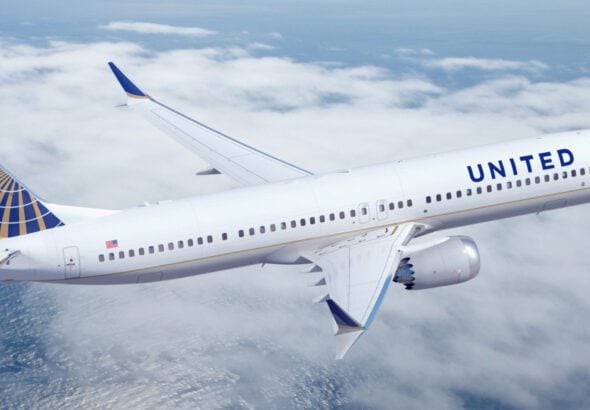
Its Official – United Continental gets WiFi

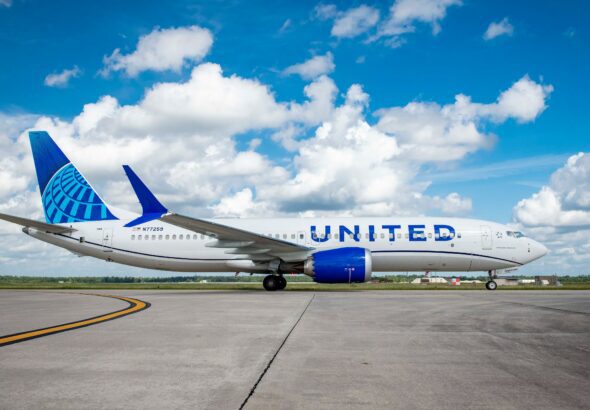
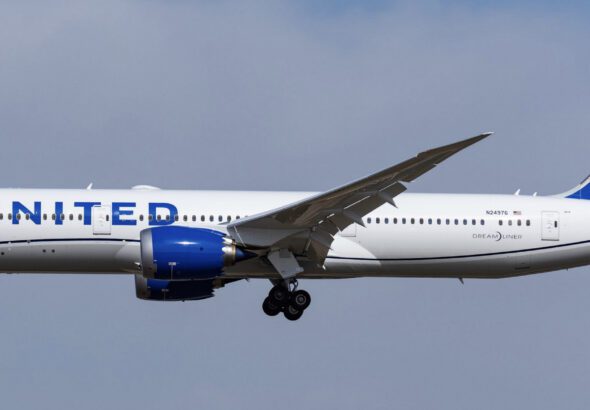
Here’s an interesting twist. Continental was toying with LiveTV at one stage for connectivity.  United was testing Gogo.  Today the following PR made it official; “United Continental Holdings, Inc. today announced that it selected Panasonic Avionics Corporation to provide WiFi connectivity in all cabins on more than 300 United Airlines and Continental Airlines aircraft beginning in mid-2012. Panasonic’s Ku-band satellite technology offers faster speed than air-to-ground technology (ATG) and will provide connectivity on flights worldwide. The system will also enable wireless streaming of video content.”

This is blow to Gogo which has to have hoped it would win the competition. It is also a blow to Row44 – the other ATG option in the market. It is a huge win for Panasonic.

Crucially the PR does mention the “killer app” – Jim Compton, United’s EVP and chief revenue officer. “As a global carrier, United is especially pleased that the Ku-band technology will enable customers to stay connected on longer overseas flights, something no other U.S.-based international carrier currently offers.” Yes that is a big item. Delta and American, please pay attention. United is now doing what its Star partner Lufthansa has done.  No doubt this selection by United was influenced by Lufthansa.

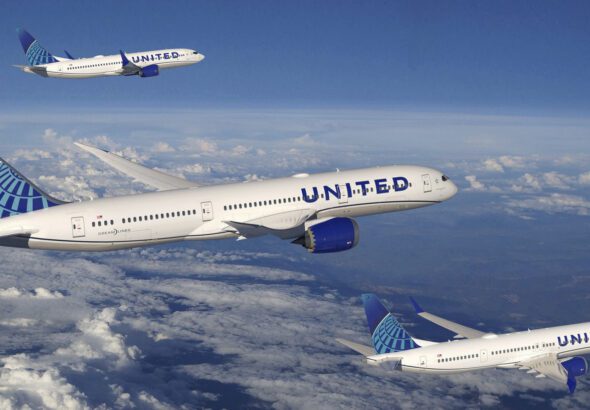
United expects to install the Panasonic system on Airbus 319 and 320 and Boeing 747, 757, 767, 777 and 787 aircraft. In other words a service offering on all its planes – making sure traveler expectations are met across the fleet. By 2015 the entire fleet will have WiFi.

Here’s a bit of CI we came across recently – Panasonic has bought the rights and IP to the Israeli developed Starling antennae. This antenna is smaller and lighter with better coverage than the Melco one dating back to Connexion and currently deployed on the Lufthansa fleet. Panasonic therefore will now be able to offer its technology end-to-end to its airline customer base. By offering hardware from the antennae to front end servers and storage Panasonic can be extremely creative in making an airline an offer no other vendor can match. With all the hardware carrying one label and coming from one vendor an airline can be assured there will be no system conflicts. It is a compelling “plug and play” offering.

ORBIS – a heartwarming aviation story

Jack McHale is former president of ORBIS, the flying eyesight saving organization. They have been doing stellar work for years and are about to move on to their third airplane. They started with a DC-8 from United. Then they had a DC-10 from United and now they are taking an MD-10 from FedEx. Over the years ORBIS has done amazing work helping people in under developed countries, saving people’s eyesight and training local doctors. It is heartwarming that so many people volunteer their services to help out in this really noble cause. [Read more...]

Replacing the 757

Delta Air Lines today announced its selection of the 737-900ER to replace its 757s.  Within the US 757 fleet there are a number at American, United Airlines, Continental Airlines and US Airways that also will need replacing before long.

In order to understand why airlines are evaluating this now we looked into the running costs of the 757 from US DoT data.  As the chart illustrates, these airplanes are becoming ever-more expensive to operate.  The industry average consists of all US-based 757 operators, including the packet freighters.  As the trend line indicates, costs of operations are rising at a scary pace.  The fluctuations are a reflection of the gyrations in fuel costs.

[Read more...]

The Coming Feeding Frenzy

American Airlines did a brave thing today with its amr-aircraft from Airbus (260+365) and Boeing (200+100).  If you are a fleet planner at United, Delta or Southwest, your stomach just took a very unpleasant turn. The US domestic fleet (except at US Airways and Continental) tends to the aged side. These airlines missed out the last order wave because of poor financials plus a soft demand.  However the cost of fuel and rising MRO costs are forcing hands – they cannot wait much longer and must renew fleets. This is what Airbus and Boeing have been waiting for – the coming feeding frenzy.

Well its here now. But American was not only brave, it was strategic too – it has bottled up just about every production slot Airbus and Boeing could have.  Boeing has the P-8 line which can be harnessed (it will have to) to increase 737 production to reach a goal of 60 per month.  Airbus has a China factory but that won’t be used for this frenzy we think – it is much more likely that Airbus will now go ahead with its Alabama factory, originally planned for the tanker. This will allow Airbus to also reach about 60 planes per month.

There will clearly be a lag before we see 120 single aisle planes coming out of factories every month – 2016 or maybe even 2017.

US airline fleet planners must be choking to realize it will be closer to 2020 before they can hope to get their hands on new more fuel efficient airplanes.  American has a lock on delivery slots for 737NGs and REs – plus Airbus’ neo production is surely stretched into the mists of 2018 by now.  This strategic move by American could mean it operates the most fuel efficient, and quietest, fleet for years before the US competition catches up.

The pressure on Airbus and Boeing to hire will be prodigious. Supply of the skills required is limited and the pool they are going to shop in is the USA. This is possibly the happiest day at aerospace unions in decades. There is going to be mountains of work and labor rates are going to be higher – Airbus and Boeing demand will ensure this.  Unions will know that the other airlines will be part of the feeding frenzy within months so they are going to be busy for years. Throw in the myriad parts suppliers and you can only imagine the limited supply of skilled labor  – its time to get work in aerospace again! This is an industry that forgets slumps faster than a sardine forgets the last circle it swam. Its all sunshine and morning in America today.

As much as Boeing celebrates yet another 737 rebirth (we cannot see the Boeing board turning down the RE now) they have to be fuming – they lost exclusivity at American and worst of all, Airbus has not only won a foothold at American, this foothold is now probably a beach head in Alabama.  In fact, this American order could be seen as a loss for Boeing – they could and should have had it all, but for the dithering on NSA vs. RE.

There is even more to consider. If airlines cannot get their hands on the “neo “versions of single aisle planes, what are they to do? Ryanair is toying with COMAC and now may just take the plunge.  Others will likely follow that lead. There is also IRKUT’s promising MC-21 on the upper end to consider.  At the lower end, the American order has to be excellent news for Bombardier which now represents not only the new technology (and the original disruption creator of the feeding frenzy) – it crucially has production capacity and delivery slots. Delta and Southwest are now surely going to revisit the CS as an option.

American’s order is a tectonic plate shifter.

Continental goes for Ka

Yesterday Continental announced it is going to install Ka-band connectivity from LiveTV. This means about 200 US domestic airplanes (737 and 757) are going to be able to offer Internet connectivity as this process gets rolled out. The story is quite exciting. [Read more...]

Skymark starts Japanese disruption

Today Skymark made it official.  As the Airbus PR states: [Read more...]

AirTran SOS – Save Our Seats

A group of AirTran frequent flyers and business class customers has formed a group to petition Southwest to maintain AirTran’s business class seating and to maintain assigned seating after the merger. [Read more...]

The Necessity of Options

Commercial aviation is a very high stakes game.  Get it wrong and you’re lucky to get a second chance.  In order to reduce risk the players hedge bets.  For example, in the case of OEMs, a typical solution is to offer engine choices. [Read more...]

Consolidation Continues in Regionals

In the wake of the Continental-United merger, the Continental regional affiliate Express Jet has been acquired by SkyWest, which operates United Express and Delta Connection services.  The value of the transaction was $133 million. [Read more...]

Ryanair – fascinating insight

We highly recommend you read this link.  What caught our eye is at the bottom of the article.  “Anyone concerned with Ryanair’s growth coming to a sudden end when the airline’s ordered 737-800s are fully delivered in 2012 can, however, be calmed by Millar’s enthusiasm over Airbus’s recent indications that a re-engined A320 family is to be announced imminently. He argues that this will put pressure on Boeing to do the same, referring to the ended talks with the American aircraft manufacturer last December as “one of the best decisions we never made.””

This suggests something  illuminating.  Ryanair is considering that Airbus’ re-engine decision will drive Boeing to respond.  This then seems to suggest that Ryanair is still in the Boeing camp.  Not buying more of the current 737-800 seems also to be a decision they are glad about.

Airlines, when dealing with OEMs, like to play something of a game. Ryanair did its last huge deal right after 9/11 and got pricing it will never see again – ever. Boeing was so scared at the time (who could blame them?) that a big buy from Ryanair kept the factories busy even as other orders were delayed or canceled.

Playing the game is risky though. Airlines and OEMs jockey for bargaining power.  Buying (and selling) decisions are big bets.  You can be sure that Airbus and Boeing closely monitor each others production to ensure they have the best possible idea of bargaining power. If Ryanair were to try squeeze a better deal out of Boeing, it helps to know if Airbus could even deliver what the airline wants.  If Boeing is sure it cannot, then they maintain their bargaining power.

But as many will tell you, the duopoly days are coming to an end. Even if most of the sales at Farnborough this week are for Airbus and Boeing.  Ryanair is a Boeing bellwether customer, just like Southwest.  Both airlines are open about wanting something more fuel efficient.  The option in the short term is a re-engine program and the quickest possible offering would be the 737 and A320 fitted with the Pratt & Whitney PurePower engine. And its not just Boeing being pushed by its biggest customers. Airbus is under pressure from a big customer too – easyJet even made a mock up of the plane they like.

Since Airbus and Boeing are in a race with each other, neither wants to make the first move unless it knows the other cannot move fast enough. Airbus could announce a re-engine program first, but has to worry about Boeing announcing a clean sheet design. The stakes here are enormous.

The decisions airlines and OEMs are facing at present is critical.  What happens next will play out over decades. The question is who blinks first?  If,  just to throw a cat among the pigeons, Southwest (or WestJet) as a big 737-700 customer were to decide it will buy Bombardier’s CSeries because it is the “right size” and has the “right engine”, you can imagine the impact of a sudden logjam bursting free.  Before dismissing this as an outlandish scenario, United’s CEO Glenn Tilton has been quoted as saying the CSeries is the “natural replacement” for the 737.  Stranger things have happened.

It may be that we are at such a logjam stage in the lifecycle of the 737 and A320. Something will break the logjam.   This is a great time to be watching the players and forces work through the process of defining the next narrow body solution.

Shopping Cart (0 Items)
Your cart is empty!


Subtotal: $0.00 USD
Total: $0.00 USD