Embraer and Boeing team to market KC-390

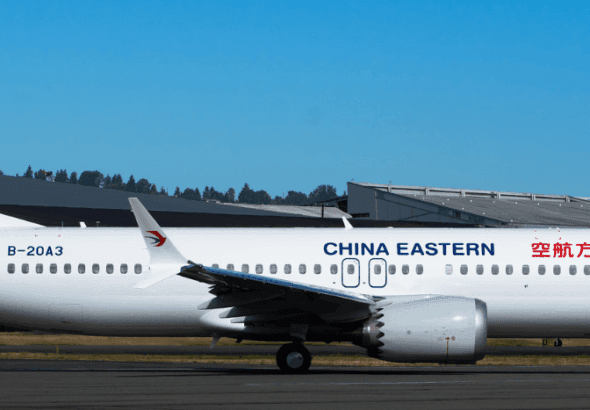
Here’s interesting news about the KC-390.  Embraer and Boeing are partnering on the sales and marketing of Embraer’s KC-390.  The PR states: “Under the agreement, Boeing is the lead for KC-390 sales, sustainment and training opportunities in the U.S., UK and select Middle East markets. Embraer will manufacture the aircraft and collaborate on sales, sustainment and training.”

As the C-17 starts to slow down, Boeing wants to keep its tactical transport options open and the KC-390 is the best option.  This news has to also be a warning for Lockheed Martin’s C-130.  The C-130 is a legendary airplane that has been the leader in the segment and the KC-390 falls squarely into its patch.

Embraer will benefit from the huge defense footprint Boeing has.  We can see this airplane being pitched to the US Marines, USAF and Coast Guard.  For that matter, also to the Israeli Air Force whose C-130s are aging. Indeed there are thousands of C-130s that are aging. These airplanes are worked hard because they do tough work.

Competition for the C-130 should have been much tougher from the AN-70. But Antonov never did seem to get the program going, despite promising tests and initial interest.  The Airbus A400M is way to large for many operators, and the C-130J is expensive.  Is there a spot in there for the KC-390?  If Embraer were to look for a partner to find one, Boeing would be first prize.

Airbus and Boeing – Competing visions

As the Paris show gets underway the orders are being announced and the sniping is in full force.  The sniping is not just Airbus vs Boeing.  CFM and P&W are also at it.  Great for the media as the sound bites are perfect for Twitter and drive readership.  Each snipe has to be as clever as possible to survive this week because next week the world will move on, back to real competitive issues. [Read more...]

What to expect at the 2013 Paris Air Show

AirInsight’s Ernie Arvai shares his thoughts on what he expects from next week’s Paris Air Show.

Play to hear the voice

and use this link PreParis 2013 for the PowerPoint.

Retail vs Real Pricing

Take a look here for the article by Vincent Lamigeon.

6-13-2013 10-00-52 AM

Vincent did a podcast with us today about his story.  Play

A350XWB Reveal

At the Airbus Innovation Days event yesterday in Toulouse the company revealed its A350-900 MSN001.  Innovation Days is Airbus’ name for its pre air show briefing event.

DSC_5886There is an old saying in aerospace; “If a plane looks right it will fly right”.  The A350-900 has that look about it.  Its dimensions seem “right”.

The A350-900 will seat 315 in a two-class configuration.  It is expected that the A350-1000 is more likely to see airlines flying this aircraft with a three-class configuration.   The economy section will seat nine across using 18 inch seats.   The A350-900 should have a range of 8,200 nautical miles.  Its Rolls-Royce engines each have 85,000 pound thrust.

The A350 XWB is a more sophisticated airplane (in technology terms) than the A380.   It will have greater e-Enablement also.  Airbus appears to have learned the tough lessons of the A380 early days. The A350XWB looks just like it did in brochures.

Airbus has seen market success with the A350XWB.  There are 616 firm orders from 34 customers.   Interestingly eight of the world’s top ten 777 operators have ordered the A350XWB.  Airbus believes the forthcoming 787-10X and 777-8X will compete with the A350-900.  This is the segment of the current 777-200.

The fact that Airbus has its A350XWB almost ready to fly (within the next three weeks, perhaps sooner, we estimate), and Boeing has yet to announce its 787-10X (despite the recent Singapore Airlines “order”), seems to put Airbus at a considerable advantage.  Even so, Boeing has seen consistent, even growing, interest in its 777.

The point here is that airlines see the “Big Twins” as an increasingly important segment.  These aircraft have capacities and ranges that enable the to handle almost any route.  With aircraft engines at unprecedented levels of reliability, these twins can fly ranges that until quite recently was the domain of the 747-400.   Which is why Airbus and Boeing have shown great interest in and received many orders for this segment.

Airbus’ A350XWB range sits between the 787 and 777.  Airbus feels comfortable that its A350XWB straddles the market effectively.  Boeing counters that they bracket the segment better at both bottom (~210 seats with 787-8) and top (~400 seats on 777-9X).   This is the usual marketing banter from the two big OEMs. Both stress their views as the most logical.  And both are right, given tradeoffs and limitations.  The challenge is always to find the sweetest spot in the sweet spot. This means figuring out where most airlines can get their range and payload needs met. Ideally OEMs want to get to the 85-90% solution.  Recent airline CEO comments from the IATA AGM about OEMs focusing on the needs of the Gulf airlines (who buys lots of planes) highlights this issue. The message to the OEMs is that these new, fast growing, airlines should not move or redefine design parameters.  For example, few airlines use the maximum range available. But these new airlines want aircraft with ranges from their home bases to virtually anywhere non-stop.

Airbus points to serious commitments from customers.  For example, A350XWB launch customer Qatar converted its initial order for 80 by moving to the bigger models.  Cathay Pacific added to its initial order.  Both these airlines are influential 777 customers.  This clearly puts Boeing under pressure to move rapidly on its 777 update.

The arrival of the A350XWB serves to demonstrate that ongoing innovation from Airbus is driving competitive pressure.  Airlines are looking for improved efficiency and lower seat costs.  The A350XWB is the next step in this process.  Boeing will respond.  And then Airbus will tweak the A350XWB and the race will continue.

STRETCH AND SQUISH – THE CHANGING NARROW BODY MARKET

The aircraft market, particularly for narrow-body airplanes, has been changing dramatically over the last two years.  Airlines are seeking better seat-mile economics, both by ordering larger aircraft and by increasing seat density on existing aircraft to accommodate traffic growth.  The implications are quite interesting for both aircraft manufacturers and aircraft lessors.

The Trend to Larger Narrow-Body Aircraft
The current trend in the narrow-bodied market can be shown in a comparison of narrow-body aircraft that have been delivered, and those yet to be delivered in backlog for current and forthcoming models from Boeing and Airbus.

Both manufacturers offers aircraft in three sizes.  The A319 and 737-700 have 124 and 126 seats in two class configurations, representing the smallest in size.  The A320 and 737-800, at 150 and 162 seats respectively, are the mid-size, and the A321 and 737-900, at 185 and 180 seats, represent the large size.   The Boeing 737Max models, -7,-8, and -9, correspond to the current NG models in size.

The following chart compares historic deliveries with backlogs at the end of the 1st quarter 2013.  It is quite clear that that the proportions of small, medium and large airplanes are changing, and quite dramatically, from historic levels.

The once strong market for the A319 and 737-700 has all but disappeared in favor of the larger sized aircraft.  While aircraft of this size have accounted for 26.6% of program deliveries to date, they only represent 5.7% of future volume. The medium and large size models are taking a higher proportion of future deliveries, while medium size aircraft moving from 63.0% of deliveries to 75.8% of backlog, and the large sized aircraft from 10.4% of deliveries to 18.4% of backlog.

At a recent conference in Phoenix, Airbus Americas’ CEO Barry Eccleston noted that of Airbus’ 394 single aisle aircraft orders from the first quarter 2013, 225, or 57%, were for the largest variant, the A321.  With slimline seats, Airbus has already raised the single-class capacity of this aircraft to 236, and is now looking at slimline lavatories to further increase capacity for airlines in effort to maximize the number of seats.  He remarked that in 2007, airlines were looking at the A319 as the right sized airplane for opening new markets, but today, the decision metrics all center on seat mile costs.

In six short years, the market has completely changed. We expect this trend to continue as airlines find it more cost-effective to fly fewer, but larger narrow-body aircraft. With a slow capacity for growth, particularly in the United States, load factors have increased to record levels, and using larger aircraft represents a “safer” growth strategy than adding additional frequencies and risking excess capacity.

The Squish Factor
Airlines are also introducing slimline seats and reducing seat pitch to add additional seats to narrow-body aircraft.  Lufthansa has increased the capacity of its A320s by 8% through the use of thin-line seats from Recaro.

Similarly, Southwest in the US is introducing new thin line seats that allow an additional row of seats in their 737-700 aircraft (137 to 143 seats) with a one-inch reduction in pitch, a 4.3% increase in capacity.  Others are certain to follow this trend.

These new technology seats are unique because of their contours, which enable the same amount of space between seats at tray table level, yet allow an increase in the number of rows on the airplane.  The manufacturers claim that passenger comfort is equivalent, and that the additional room from the smaller frames makes up any difference. We will have to wait and see whether our rear-ends agree with that assessment.

The Bottom Line
The trend towards larger narrow-bodies is now quite clear.   What it means is that the 737-7Max and A319neo might not be as sound an investment for an airline or aircraft leasing company, as demand is moving away from that sector, likely impacting residual values.  This is also impacted by the forthcoming entry into service of the similarly sized Bombardier CSeries that offers much better seat-mile economics.

But it also means that investing in the larger A321neo and 737-9Max will likely find increasing demand, higher residuals, and will be easier to re-market in the future than today’s large models.  If I was I a betting man, I’d wager the larger models will continue to increase their market share and hold residuals better than their smaller counterparts, and favor the larger aircraft in financing transactions.

Lufthansa sends a message

Please start here.  Having the airline CEO make these remarks about the future of the 747-8I even as it took delivery of its seventh last week is a significant message.  Boeing is in the midst of rolling out a refinement on its 747-8 – so the OEM remains committed to the program. There are also rumors of campaigns that could see more orders. But, as always, rumors in this industry are like the weather, constantly changing.

The market has spoken about the 747-8, and it has spoken softly.  The airplane has been getting good reviews from Lufthansa, the only airline flying the passenger version at present.  Indeed Lufthansa has said they find the 747-8I and A380 offer similar economic numbers.  Yet the airline slowed 747-8I deliveries even as it ordered a third tranche of A380s.

Lufthansa therefore has extraordinary impact on the VLA market.  The CEO’s latest words are important because for the first time it seems there may be a crack in the airline’s commitment to the 747-8I.  The re-orders for A380s were an unspoken message – but now we have the CEO saying the future of their commitment to the 747-8I is seeing a sunset.  It will be interesting to see if Lufthansa will take all the 747-8Is it has on order.

Most observers seem to concur that the arrival of the 777-9X will be the death knell of the 747.  Boeing has managed to develop the already impressive 777 into the benchmark 777-300ER.  Taking the design a step further to the 9X is no doubt highly attractive because new materials keep weight down, while allowing for much better economics and probably require less powerful engines.  That means a growth 777 is likely to offer what airlines want: ~400 seats with ~7,000 NM range with 15-20% lower costs.

The sunset of the 747 in passenger mode does not impact its future as a freighter. It will be some time before the 777F takes away business.  Nor does the sunset on the 747-8I impact the A380 program, in our view. The A380 at over 500 seats remains in a class of its own.  And in major O&D markets where slot constraints are standard, this airplane is the only efficient option.

787’s Grounding Has Small Impact on Boeing

Now that the Boeing 787 is returning to service and deliveries have re-started, it’s only natural to wonder what the long-term impact will be on the manufacturer.

The answer is, not much.

The grounding, of course, cost Boeing in terms of research, design, development and installation of the fix. Estimates from Wall Street conclude this may be about $600m. Boeing, of course, won’t confirm this figure and in any event said on the most recent earnings call that the cost was easily absorbed into its R&D budget. The Federal Aviation Administration estimated that installing the fix is about $465,000 per airplane.

Compensation to customers, both those who had received the 50 787s prior to grounding, and those whose deliveries have been delayed, is another cost to Boeing. The company said it is not contractually obligated to pay any compensation, but Japan Air Lines, Qatar Airways, United Airlines and others already indicated publicly they intend to seek it.

Since the grounding was due to defect—the root cause of which remains unknown—we believe Boeing will do the right thing and provide compensation in some form.

While some in the media like to press home the question of financial impact on Boeing, we like to point out that the company weathered four years of delays at an estimated cost of $22bn. If Boeing could withstand this impact, what’s 3 ½ months and perhaps $1bn? Although we hesitate to characterize $1bn (if this is close to the number) as pocket change, given Boeing’s size, cash position and cash flow, this is hardly a cost that will make or break the company.

What about the lost revenue from the deliveries?

This is easy. The revenue is simply shifted from the first part of the year to the second half, because Boeing anticipates catching up all scheduled deliveries and handing these airplanes over before the end of the year. Had the grounding occurred in the fourth quarter instead of the first, the revenue would have slipped to next year.

The Boeing and 787 brands certainly took a hit and it will be a while before this damage is erased. But Boeing and the customers have made a good start. The effort will get a further boost when the 787-10 is launched with solid orders from blue-chip customers. We think by the end of this year, absent any other “event,” the 787 will be back in good graces with the flying public and certainly the customers.

Assembly begins this year on the 787-9, which will be another milestone in the brand recovery. By all accounts, the 9 will be a much better airplane than the 8, incorporating lessons learned, design improvements and benefitting from the general proposition that a stretch is always a more economical aircraft than the short version.

Production is ramping up smoothly toward 10 per month by the end of the year. This is another sign Boeing can point to that the program is back on track.

By next year, the aviation industry can get back to normal: Boeing vs Airbus and the fierce rivalry—and the news coverage—this enjoys.

Noisy Neighbors?

NOT WITH GAME CHANGING AIRCRAFT AND ENGINE TECHNOLOGY

The introduction of the Bombardier CSeries in 2014 will bring the first application of the next generation of engines for narrow-body aircraft, the Pratt & Whitney PurePower 1000G geared turbofan.  The combination of a new engine and an advanced high technology airframe will generate a very substantial change in the environmental impact of airplanes, the largest we’ve seen since the first generation noisy cigar tube engines were replaced by high bypass engines in the 1980s.  [Read more...]

A350 Roll Out

1.4

They say a picture is worth a thousand words.  There is no argument that Airbus’ A350 is a beautiful airplane.  The roll out of MSN001, fresh from the paint shop, is an important milestone. Airbus reports the painting was completed in less than seven days and followed recent completion of MSN001’s flight-test-instrumentation (FTI) verification. Last month the aircraft underwent engine installation and passed a subsequent intensive phase of ground vibration tests. MSN001 will soon start the final tests before its maiden flight this summer. [Read more...]

Shopping Cart (0 Items)
Your cart is empty!


Subtotal: $0.00 USD
Total: $0.00 USD