Singapore Show Orders

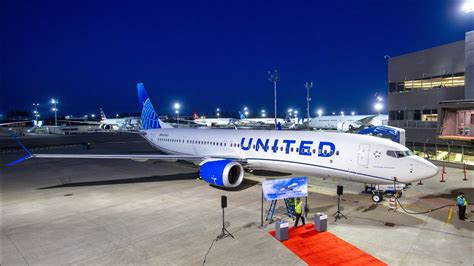
This show follows the usual pattern – orders get announced for maximum media coverage.  And the orders are big. Boeing started with a massive order – it’s biggest ever – Lion Air of Indonesia finalized a firm order for 201 737 MAXs and 29 Next-Generation 737-900ERs. The agreement, first announced last November, includes options for an additional 150 airplanes. Lion is launch customer for the MAX-9. With orders for 230 airplanes valued at $22.4 billion (list prices), the deal is the largest commercial airplane order ever in Boeing’s history by both dollar value and total number of airplanes.

Not to be outdone, Airbus also made an order announcement. ALAFCO Aviation Lease And Finance Company, a Kuwait-based international aircraft leasing company, finalized a purchase order for 35 A320neo Family aircraft bringing its total backlog for the type to 85.  The firm contract is an increase from the previous agreement signed at the 2011 Dubai Airshow for 50 A320neo aircraft.The 2011 neo order included P&W GTF engines so we assume the same applies to the new order as well.

Then another unexpected order popped up. BOC Aviation said it has ordered 20 C919s. There has been little news from COMAC and the C9191 for a while.  And keeping the order game going, Bombardier announced and order for five Q400s.  This follows news last week of an order for up to 24 CRJ1000s. Interestingly the customers have not been announced though the assumption is that the CRJs are going to Garuda.

Podcast – 2012 and the CSeries

Airline Business Editor Max Kingsley-Jones wrote an intruiging piece on the Bombardier CSeries in 2012. So we called Max and had a chat about the airplane and its prospects.  The CS is seen as living in an awkward segment – bigger than regional jets but smaller than full size airliners.  Bombardier is very confident of this segment and the success Embraer has seen in this segment seems to endorse this confidence. Trunk liners have a spotty record all the same.  It is a tough space to work in.  That said Bombardier needs a few more “big name” customers and these are likely to be forthcoming once the program has better visibility. 2012 is an important year for the program as it approaches the first flight in 2013.  Since program delays are “new normal”, airlines are to be expected to hang back until they can more clearly see the program’s milestones being reached.

Play

Airbus to Enhance A330 Capabilities

Today La Tribune reports that Airbus is going to increase the MTOW of the A330-300 by five tonnes to 240 tonnes.  This should enable the A330-300 to increase its range by 400 miles. The additional weight will be offset by weight reduction from the design where A340 requirements are no longer needed.  The A340 and A330 share a common fuselage.

The move is clearly not only to occupy the segment forgone by the elimination of the A340, it is also an attempt to close the perceived gap between the A330 as we know it and the Boeing 787, which offers longer range.

Airbus newest product, the A350, will be larger than the 787 and similar in size to the 777 series. Boeing has two models that bracket the A350; the 787 at the lower end and the 777 on the upper end.  By adding more capabilities to the A330 Airbus closes what many have thought to be a key gap on the smaller side of the market.

According La Tribune Airbus should be able to offer this enhanced -300 between three and four years from now.

The A330 is proving to be a remarkably resilient and flexible design. John Leahy, Airbus COO Customers, points out that since the announcement of the 787, Airbus has sold 740 A330s. Clearly writing off the A330 is premature, and Airbus enhancements should provide additional life to an already successful program.

Big airplane sales mean big engine sales

This morning CFM provided the following PR: “CFM International (CFM) had a record year in 2011, logging orders for 1,500 commercial, military and spare CFM56 engines and commitments for 3,056 LEAP engines for a combined value of $51.7 billion at list price.

As the company logs record commitments, CFM is also achieving record production rates for the CFM56 product line. The company has built more than 1,000 engines per year since 2006, and the rate has grown steadily. In 2011, CFM delivered more than 1,300 engines, the highest rate in the industry, compared to 1,250 engines built in 2010.  Current plans are to reach more than 1,600 engines per year by 2014.”

This is what a great year looks like.


Cathay Pacific Adds to its A350-900 order

Cathay announced it was adding to its existing A350XWB order by committing for six additional -900s.  The airline now has 36 A350s on order plus two more committed via pre-arranged 12 years leases.  These six aircraft are scheduled for delivery in 2016-17.

The selection of this airplane is important because Cathay Pacific is also a significant 777-300ER customer.  The A350-900 falls between the 777-200 and 777-300 in size, with 314 seats, falling between the 301 and 365 capacities of the competing 777 models.  The forthcoming A350XWB-1000, at 350 seats, will be closer to the 777-300ER, and could represent a potential replacement for that aircraft in the future.

This is certainly an interesting development, given that Boeing will be introducing its revised 777-8 and 777-9 shortly after that timeframe, although it is not expected that the re-engined version of the 777 will fully match the economics of the much lighter, heavily composite A350XWB.

Airlines that operate the 777 are typically very pleased with the airplane, which has been among Boeing’s best products.  Cathay has been a particularly happy customer of the 777-300ER.  Boeing’s revised 777-8 and -9 models will no doubt continue to build on the success of their -300ER, and we expect the 777-9 to be larger than the existing 777-300ER to improve seat-mile economics.

Cathay has ordered 71 777s so there is no doubting its current commitment to the airplane. But ordering the new technology A350XWB could mean a key conquest for Airbus in the large wide-body twin segment.  It appears Cathay is planning on standardizing on the A350-900, and possibly the A350-1000 in the future, for the 300-350 seat segment.

All cracked up

The A380 crack news is overblown and it is important to source the loudest voices.  It happens that the most vociferous voices are in Australia.  Take a look at these two sources; link 1 and link 2.  Given the state of relations between Qantas and some of its unions, is there any wonder where the noise is coming from?

The union’s attempt to induce some sort of panic is not a good idea at all.  The A380 has weathered a far more frightening event (QF32) than hairline cracks.  Calling for the grounding of the A380 fleet worldwide is disingenuous; this demand is a spurious attempt at creating a media frenzy.

There were no calls for grounding Boeing 737s after cracks (real big ones, not hairline) appeared. That ramped up checks on the fleet were needed was not argued; repairs were made and the planes continue to provide sterling service.  No crew will board a plane they feel is “unsafe”.  If the crews fly, so should you. Don’t buy into any loud pontifications. Especially ones seeking media coverage.